If your hips feel tight, your lower back feels stubborn, or stretching alone doesn’t seem to make much of a difference, this practice offers a different approach.
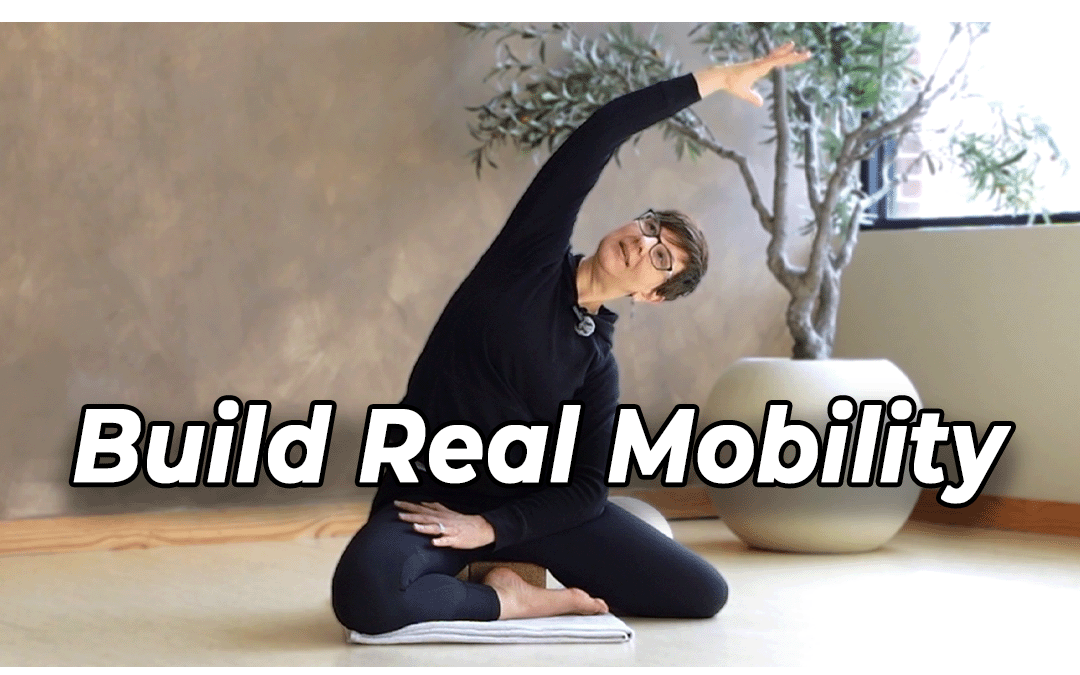
This 10 minute seated mobility routine focuses on building lower back and hip mobility through strength and control, not just flexibility.
Pushing the range of motion is not the goal — it’s to create movement your body can actually use in everyday life
The entire flow stays close to the floor and uses simple props (a small fitness ball and two blocks), making it accessible while still effective.
What This Mobility Practice Focuses On:
The majority of this flow targets the hips, while also supporting movement through the spine and even offering a bit of bonus ankle mobility along the way.
You’ll work on:
Lower back and hip mobility
Improving hip range of motion without forcing stretches
Core and glute strength for mobility support
Creating more controlled movement through the spine
Building a foundation that supports confidence with floor-based movement
This isn’t passive stretching. It’s intentional mobility work designed to help your body feel more supported, stable, and capable
What Makes This Practice Unique:
Many mobility or flexibility videos focus on how far you can stretch. This one focuses on something different: Can you control your movement?
By working seated with props, the practice:
Encourages strength alongside flexibility
Keeps you grounded and supported while working a wider range of motion
Emphasizes quality of movement over depth
Prioritizes sustainability and long-term progress
It’s a great option if you’re tired of feeling like you’re stretching all the time without seeing meaningful changes in how your body actually moves.
Notes & Tips to Keep in Mind:
A few simple ways to make this video more accessible:
No small fitness ball? Use a pillow or rolled-up towel instead.
Sensitive knees? Add extra cushioning (like a folded blanket) under you.
Do what you can with what you’ve got. Every body’s range of motion looks different, and that’s exactly how it should be.
This practice is meant to support your body, not force it.
Who This Video Is For
This seated mobility flow is especially helpful if:
Your hips or lower back often feel stiff
You want to improve mobility without getting up to standing
You’re looking for movement that supports healthy aging
You prefer a calmer, more intentional approach to mobility
You want options that meet your body where it is today
You don’t need extreme flexibility to benefit. The focus is on building awareness, strength, and usable range of motion over time.
Small, consistent mobility work adds up. It often looks subtle, but it shows up in the moments that matter—getting off the floor with more ease, moving without hesitation, and feeling more at home in your body over time.
it’s about how well you control movement as your body shifts, reaches, and responds to change.
If your shoulders feel tight and your balance feels inconsistent, flexibility alone usually isn’t the missing piece.
Stability is.
This standing mobility flow focuses on balance and stability training while improving shoulder mobility using a resistance band. It’s short, efficient, and designed to help you feel more supported as you move through everyday transitions — without long workouts or floor work.
What This Standing Mobility Flow Works On:
This sequence blends yoga-based mobility with functional movement principles to support real-world strength and control. You’ll work on:
Shoulder mobility with active support
Balance and stability during dynamic weight shifts
Coordinating upper and lower body movement
Feeling steadier, more connected, and more confident in motion
Everything is done standing, making this a great option if you want effective mobility work that fits easily into your day.
Why Balance and Stability Training Matters:
Balance isn’t just a foot or ankle skill. It’s a whole-body conversation between your core, shoulders, hips, and nervous system. Training stability during movement — rather than only holding still — helps your body respond better when life isn’t predictable.
This flow emphasizes smooth transitions, controlled weight shifts, and integrated shoulder support so balance becomes something you move through, not something you try to freeze.
Notes & Tips to Keep in Mind:
Keep these cues in mind as you move:
Work within a comfortable shoulder range. We’re not working into pain. If your hands feel too narrow on the band and you notice discomfort in the shoulders, try widening your grip to reduce that sensation.
Light core engagement is recommended to help support your balance as you move through the transitions.
Your movement doesn’t need to look like mine. Everybody has its own structure, variations, and capabilities — work with what feels right for you.
In the curtsy squat, maintain tension in the resistance band so the shoulders and core stay active and supported.
As you transition from the second single-leg balance into the upper-back arch, allow the sit bones to shift slightly back to support the movement.
Have fun with it. Let your breath guide the transitions and help the movement feel fluid rather than forced.
A Smarter Way to Train Mobility
This isn’t about pushing harder or doing more — it’s about giving your body the right input. A few focused minutes of stability-based mobility can go a long way toward helping you feel steady, supported, and confident as you move.
If you’re looking for a standing mobility flow that supports both shoulder mobility and balance and stability training, this practice fits easily into real life.
It’s about how confidently you can support yourself—especially when your hands and arms are involved.
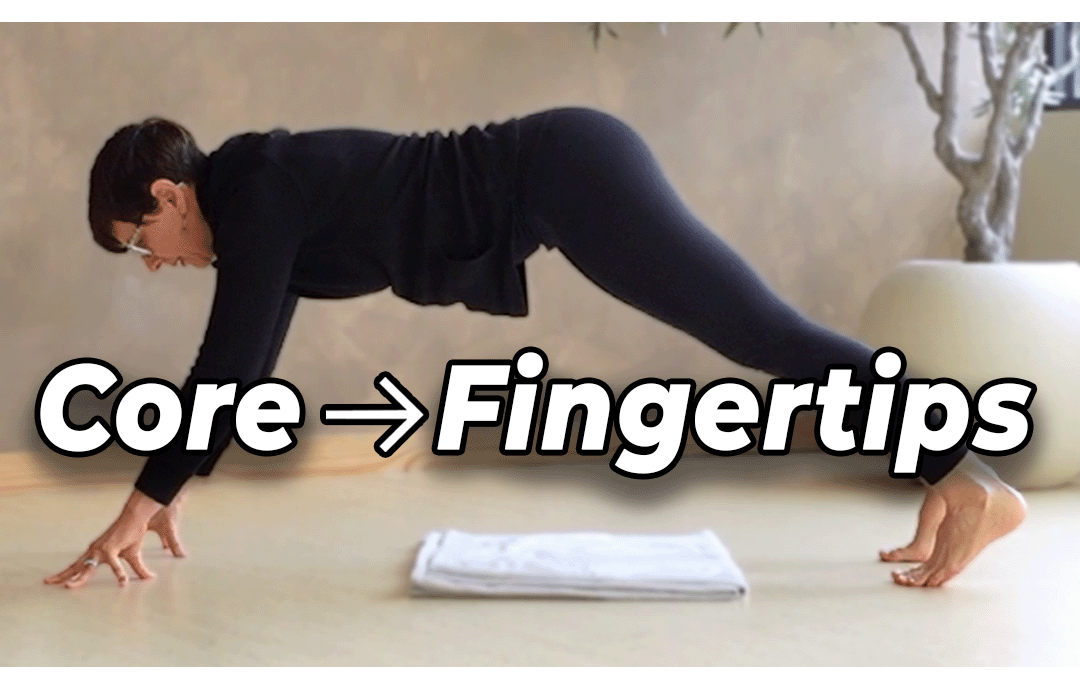
This progressive mobility flow focuses on building strength that helps you feel more stable and capable when you’re on the floor, moving through hands-and-knees positions, or needing to catch yourself with your arms.
Instead of rushing through movement, this practice slows things down so your body can actually learn how to organize strength from the inside out.
What This Practice Helps You Build:
This mobility flow supports:
Confidence supporting weight through the hands and arms
Core strength that stabilizes the upper body
Better control when transitioning on and off the floor
Strength that shows up when balance is challenged
Awareness of how momentum can bypass real strength
Because the movement progresses, the body has time to adapt. Each level asks a little more from the system without forcing you to be anywhere you’re not ready for yet.
Why Control Matters More Than Speed:
Momentum can make movement feel easier—but it strips you of the opportunity to build strength. When you slow down, your nervous system has to stay engaged. That’s where meaningful strength and coordination develop.
This practice emphasizes intentional loading, especially through the arms and hands, so strength is built gradually and with awareness.
Notes & Tips to Keep in Mind:
Keep these cues in mind as you move:
Avoid using momentum—it cheats you out of building strength.
You can lower one elbow at a time, just stay connected through your core so your body doesn’t rock side to side.
Use a rolled-up yoga mat, towel, or blanket under your knees for cushioning.
This movement nugget progresses—do what you can now and stay consistent. Come back and continue building toward the ultimate level.
Your movement doesn’t need to look exactly like mine. You do you
Who This Practice Is Perfect For:
This flow is especially helpful if you:
Want to feel more confident supporting yourself on the floor
Care about strength that carries over into real life
Prefer thoughtful progressions over fast workouts
Appreciate options and permission to build over time
This mobility flow isn’t about pushing harder. It’s about building strength you can trust—so when your hands, arms, and core need to support you, they’re ready.
This hands-and-knees grounded movement nugget delivers a comprehensive full-body experience without ever having to stand up.
Flowing seamlessly from one position to the next, this sequence combines strength, mobility, and balance in one efficient package.
What to expect:
Hip-opening
Shoulder stretches & strengthening
Stability challenges
Back stretches
Lower body flexibility
Each movement connects fluidly to the next, creating a yoga-inspired flow that keeps your body moving and engaged throughout.
Benefits:
Improves whole-body mobility while being gentle on joints
Strengthens core stability through multiple planes of movement
Enhances shoulder and hip flexibility simultaneously
Creates space in the spine
Builds floor-based functional strength
Perfect for those with standing limitations
Transform your mobility in minutes with this ground-based sequence – where powerful movement meets mindful flow for results you’ll feel long after you leave the floor.
We’ve all had those days where even basic movements feel like a struggle.
Everything’s tight — your hips, your shoulders — and you’re moving like the Tin Man in need of oil. ????️
I get it!
Mobility is the key to feeling better in your body, especially when everything just feels off.
The good news?
It doesn’t take much to loosen up.
In my latest video, “Mobility for Stiff People – Vinyasa Yoga Flow,” I’ll guide you through small, repeated movements (I call them “MicroFlows”) that target stiffness and help you move like a human again! ✨
Here’s the deal: When your body is stiff, even the simplest actions feel like a chore.
But with this flow, we’ll gently oil those squeaky hinges, get your fascia moving, and release some of that built-up tension in your hips, shoulders, and joints.
Ready to feel less like a robot and more like you?
Let’s hit the mat and get those joints moving. ????♀️
Thanks so much for sharing this beautiful practice with me.
Happy yoga-ing!
❤️????❤️
Holly
DETAILS:
???? Good for Experienced Levels
Enjoy! Be well. Remember to breathe. ????????Namaste my friends????????