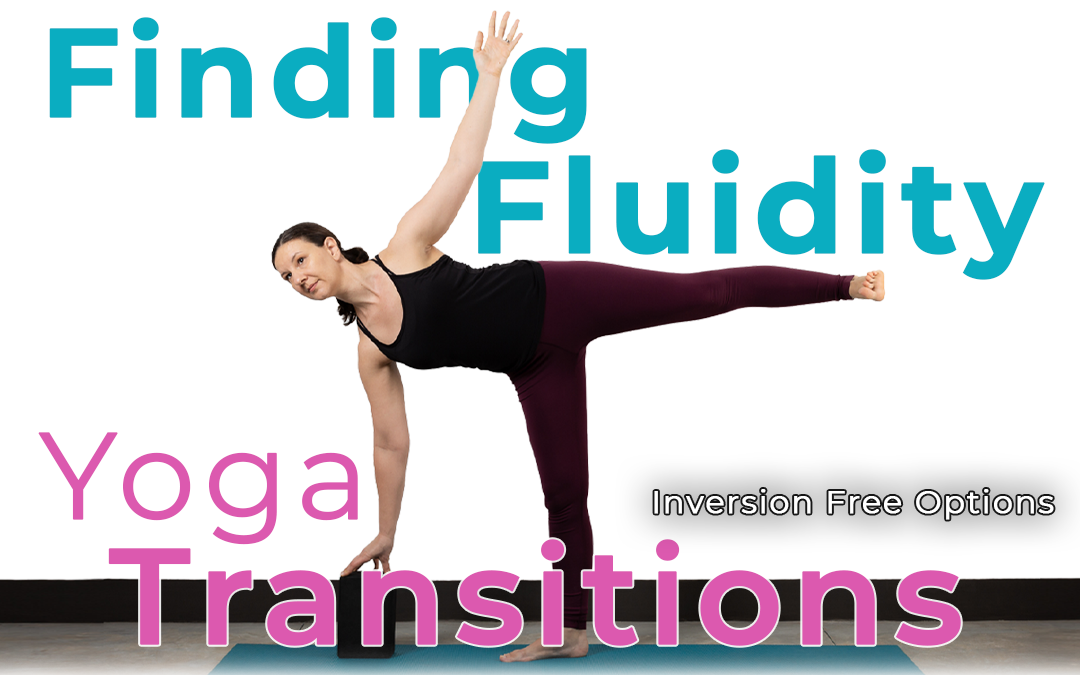
Finding Fluidity in Yoga Transitions is a way to make your Vinyasa practice seamless. So let’s work on it together in this vinyasa flow with Inversion Free Options.
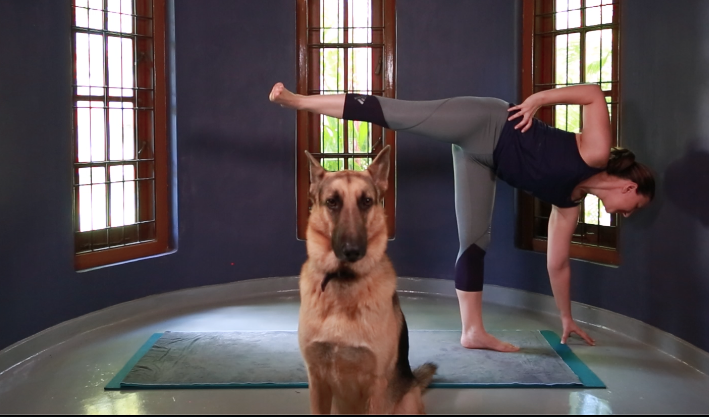
Are you struggling to find your Half Moon Balance (Ardha Chandrasana) moving from Warrior 2? This How To video will help you prepare for this transition and strengthen your ability to balance in a sideways position.
In the second half of this How To, I’ll cover moving in and out of Chapasana as well.
Enjoy! Be well. Remember to breathe. ????????Namaste my friends????????
Please note: Links included in this description might be affiliate links. If you purchase a product or service with the links that I provide I may receive a small commission. There is no additional charge to you! Thank you for supporting me so I can continue to provide you with free content.
As I sat down to write all about the Basics of the Bandhas in a Yoga Practice, I wound up leafing through my notes from my initial yoga training that was 10 years ago. While I have great memories of those times, the actual application of the material has been vital in my growth as a yoga practitioner and as a yoga teacher. I’ll share with you what I have learned about the bandhas and currently implement in my own personal practice.
I’m going to do my best here to keep my explanation simple; if you know me, you know this is no simple feat. I’ll cover the why’s and how’s of the most commonly used Bandhas in a yoga practice.
Okay, here we go.
Bandhas are defined as “to lock, to hold, to stop”. This refers to locking, holding, or stopping energy with physical connections. Along the spine, there are three used to direct the flow of energy. My beautiful notes from ten years ago say this, “(Bandhas) work like the heart valve to keep energy in and moving up and don’t let it back out.” This phenomenon is ultimately responsible for the ‘zen’, calm feeling when you are finished with your practice. In a nutshell, they help ‘ya feel good.
Let’s go over these three bandhas.
Note: Bandhas should not be practiced by pregnant women. Those of you with eye pressure issues and/or cardiac issues should stay away from any breath retention (holding the breath).
The first one is called Mula Bandha (Moo-lah Bond-ah) and it’s location is the pelvic floor. It’s the root lock as it’s at the base of the spine. The engagement of this bandha is very similar to Keigel exercises. It’s those muscles you use to stop the flow of urine plus you have to contract your anus (like you’ve gotta go to the bathroom NOW but there’s no where to go). Mula bandha engagement keeps the energy from falling out. It’s used in asana practice, like a Hatha or vinyasa, in poses like Tadasana (Mountain Pose), Urdvha Dandasana (Wheel Pose), Sirsasana (Headstand), Paschimottanasana (Seated Forward Fold with extended legs), etc.. Oh—and every other pose during the entire practice. Yep, the whole thing!
Moving up the spine the next bandha is Uddiyana Bandha (Oo-dee-ayn-na Bond-ah) and it’s located in the belly. This bad boy of a bandha is by far the most frequently mentioned bandha of the three. There are two engagements; subtle and full.
The subtle engagement of Uddiyana Bandha is a gentle pulling up and in of the belly toward the spine. From an anatomical perspective think about Pilates’ “Powerhouse”. The main muscles that create the Powerhouse are the rectus abdominis, the obliques, transverse abdominis, diaphragm, multifidus, gluteal group (your bum), the pelvic floor, and the psoas. When your movement teacher says one of these cues, “Pull the belly up and in”, “Scoop the belly in and up”, or “Hollow out the belly”, they are referring to Uddiyana Bandha with this subtle engagement. If you’ve taken any of my classes, you’ve heard me say these cues A LOT.
Energetically speaking, this bandha moves the energy from the lower abdomen upward toward the head. Physical benefits of this bandha provide support for your spine, hips, standing balances, and overall stability.
Now the full engagement of Uddiyana Bandha is done with the purpose of cleansing, toning the abdominals, and massages the internal organs. Sounds intense, right? I promise it’s not that bad. Instead of grabbing milk of magnesia or the pink stuff, try Uddiayana Bandha. It stimulates your digestive juices to help remedy stomach ailments. It also balances the adrenal system, relieves stress and can pep you up. (Remember, this bandha moves energy upward).
Here’s how you do the full engagement but before we get into it…it’s best to learn this in person with an instructor if possible.
Full engagement is done on an empty stomach and empty bladder. (????Super important.) Start standing in Tadasana, feet hip width apart, hands on the hips. Inhale deeply. As you exhale, bend the knees slightly, hands to the thighs, elbows out, and let the belly soften outward. Once ALL the air is out, suck your belly up and in toward the spine and up under your ribs. Hold your breath. When you need to inhale, FIRST release the belly then take your inhale through the nose, keep the hands on the thighs. On your NEXT inhale gently come to full standing position, Tadasana, and go for another round.
✨This can be repeated up to six times. ✨Wait about 15 minutes before eating or drinking so your belly can benefit from the exercise.
The last of the bandhas along the spine is Jalandhara Bandha (Jah-lan-harra Bond-ah) located in the throat area. This seals the energy lock from tail to skull; the length of the spine. Jalandhara Bandha can be considered the lock that controls the flow of energy in the nerves and blood vessels of the neck as it engages the medulla oblongata.
It’s performed by lowering the chin toward the notch between the collar bones. It’s similar to holding a small piece of fruit or an egg with your chin. When done correctly, if you’re built like me, you’ll have a glorious double chin.
It’s used in a few poses like Dandasana (Staff Pose) and Sarvangasana (Shoulder stand). More frequently, it’s used in pranayama practices like Ujjayi (ocean breath) and Nodi Shodhana (Alternate Nostril breathing).
When all three of these are done at once, it’s called Maha Bandha. The great seal or lock a.k.a. The Big Kahuna Bandha. Just kidding. It’s not called that but it sounds fun.
Bandhas are defined as “to lock, to hold, to stop”.
There are a few other bandhas which I’ll mention but not get into detail about because they are self-explanatory…
Hasta Bandha is when the hands press against the ground…the ground stops the energy from leaving through the hands. Same with the feet with Pada Bandha.
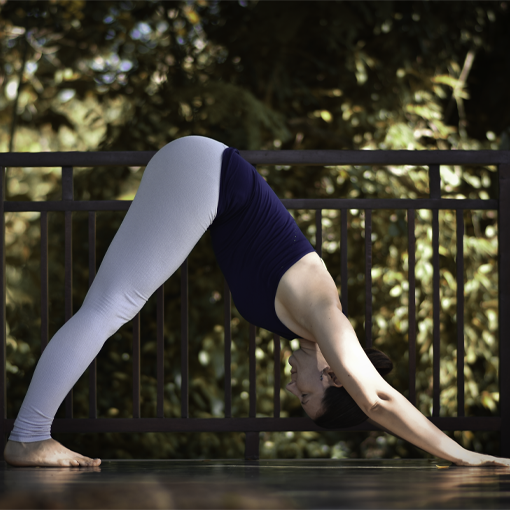
i.e. in downward facing dog, you’re practicing both these bandhas. In arm balances, you practice Hasta Bandha. In Warrior poses you’re using Pada Bandha. You get the idea, yes?
Lastly, there’s Brahma Bandha. This is when you keep your mind locked on God as you practice.
There you have it. Bandha mania all wrapped up in one little blog post. I hope this brings more understanding on the why’s and the how’s of Bandha usage in a yoga practice. Implementing them into your practice, if you’re not already, will create a new layer of understanding with continued practice.
During my home practice this morning several thoughts manifested. One in particular stood out.
The predominant word that kept coming up during this practice was “free-flowing”. Here’s why: I found myself trying so desperately to hold on to habits that have worked for a long time but at that moment I realized, it’s time to let it go; to let myself flow freely; hence, “free-flowing”. Perhaps my dance improvisation habits were interfering?
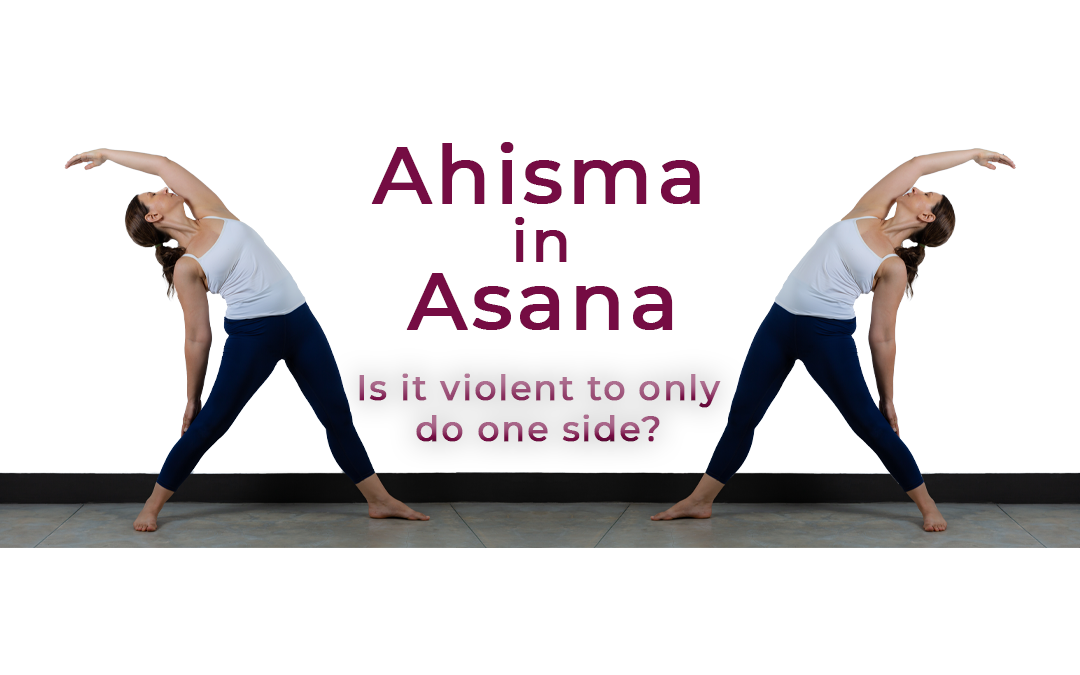
Ahisma = Non-violence Asana = Pose
You see, in dance improvisation, it’s encouraged to discover ‘new movement’ and ‘new movement phrases’. By allowing yourself free-flowing movement, the structure starts to melt away and new ways of moving your body are created. Which is super cool if you’re into it. But today these two ideologies were butting heads in my head.
I was struggling with the idea of having to fit my practice into an ideal structure. This is a structure that I’ve practiced for years, what is done on one side must be done on the second to stay “balanced”. But what if one side doesn’t need what the other needs? So, I decided for today, it’s time to let the flow be free.
Balance is important, I’m not saying otherwise, but isn’t allowing the freedom of movement to flow as it will important too?
My mind was working in symmetries where maybe it didn’t need to. Then the philosophy of the 8 limbs of yoga and the idea of Ahisma came up.
A brief summary of what Ahisma is and what it means from someone who isn’t a yoga philosophy master but enjoys a good discussion.
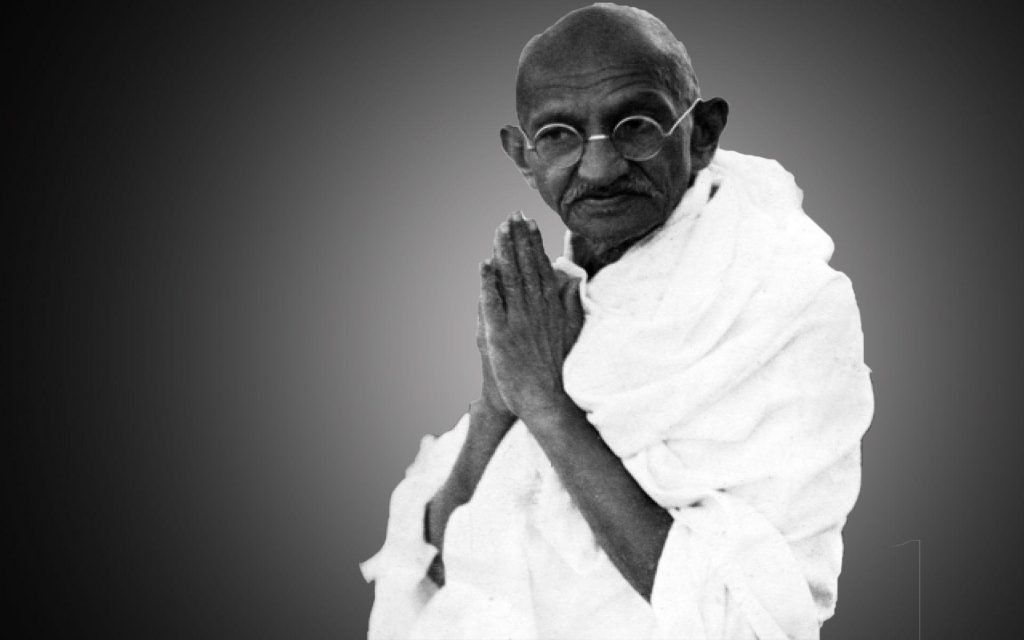
Ahisma is defined as non-violence. Most people see it as non-violence toward others (people, animals, plants, insects, etc) but it also means non-violence to yourself. Ahisma is love; speaking kindly, acting with kindness and compassion, and letting go of what no longer serves you. (You’ve heard this last one in many yoga classes, I’m sure). Mahatma Ghandi focused his life around the idea of Ahisma and if you’d like to learn more about him check out this website: https://www.mkgandhi.org/
Mahatma Ghandi
B.K.S. Iyengar said in his book The Tree of Yoga,
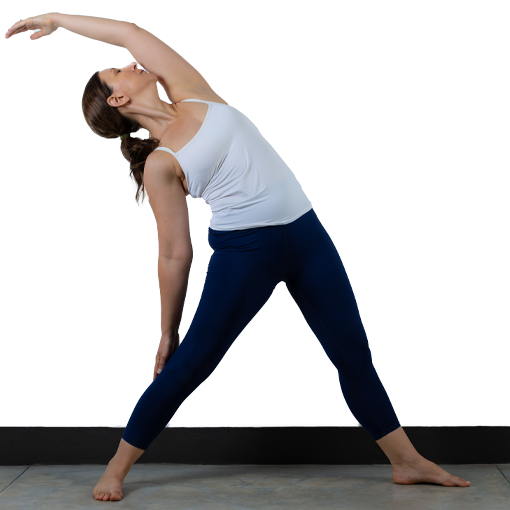
“Suppose that in performing an asana you are stretching more on the right side and less on the left…There is violence on the right side where you are stretching more, and the left side, where the stretch is less, appears to be non-violent…Though it may appear non-violent, it is also violence as the cells will die when they do not perform their functions as they should. One side thus manifests deliberate violence, and the other side non-deliberate violence.”
Disclaimer: Links included in this description might be affiliate links. If you purchase a product or service with the links that I provide I may receive a small commission. There is no additional charge to you! Thank you for supporting me so I can continue to provide you with free content.
Not doing one side can cause a feeling of being lopsided. But if one side needs a little more or less than the other side and we treat them according to what they need, then we are practicing Ahisma. Or in Iyengar’s words, “What is required is integration between the right and left sides of the body, and this balance of the two sides is true non-violence.”
So, by this reasoning it IS violent to not do one side. Oops. Sorry body. I’ll keep Free-Flowing but on BOTH sides from now on.
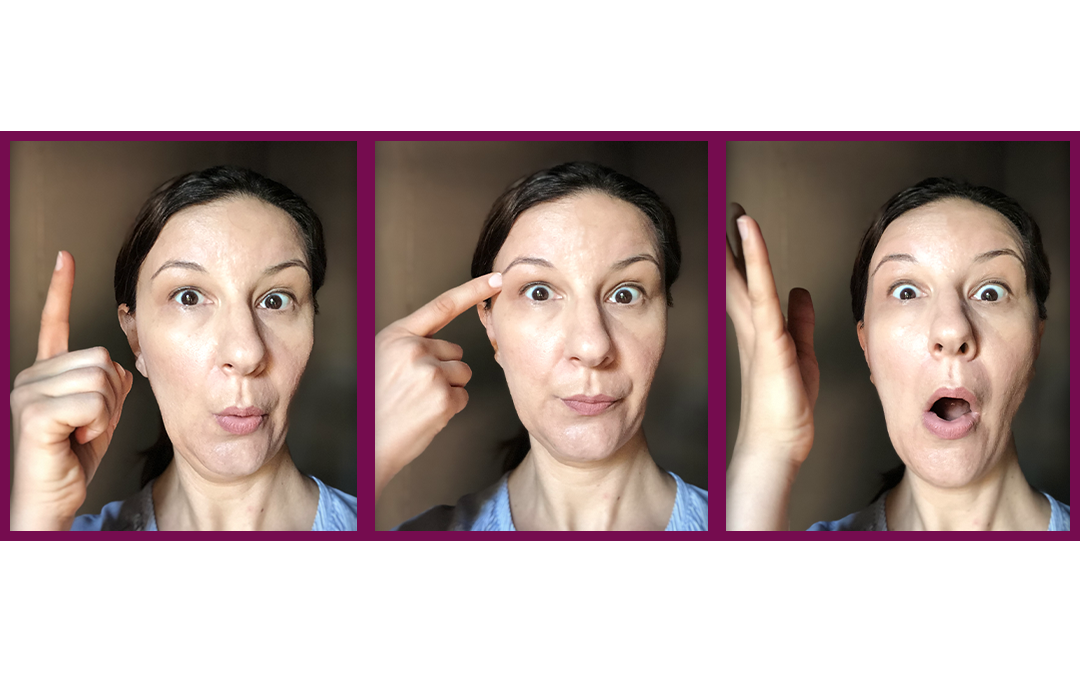
Have you ever had an ‘A-ha’ moment during your yoga practice?
Don’t worry if you didn’t.
Not every yoga practice is a life changing moment but instead builds moments to a life change.
After Savasana, I always prompt this:
“Take a few moments to check in with how you feel. How do you feel physically, emotionally, mentally, energetically, and spiritually?”
What does all this mean?
Yoga isn’t just the physical practice. Yes, we get on the mat, we move physically but when we move physically, it effects everything else.
Ever go into a fitness class or dance class in a foul mood but walk out feeling SO MUCH BETTER?? Yeah, it’s because of all the beautiful hormonal changes that happen when we move our bodies…
Moving your body has been scientifically proven to keep us healthy. It creates the happy hormones; Dopamine, Serotonin, Oxytocin, & Endorphins.1
Once you stop moving, your body starts to weaken and things start to deteriorate. Physically AND mentally. Because…MOVEMENT IS LIFE.
I digress…(and I gracefully step off my soap-box)
Here’s what I’m really asking you to observe and think about at the end of each practice.
Notice what you feel physically. The good, the not-so-good, and the bad. i.e. tingling, tightness, weakness, stretched out, muscle fatigue, soreness, etc. ~ By taking notice, you learn what poses, what style of yoga, what breath work, and what meditations work for you and your body.
2. What do you feel emotionally? i.e. boredom, excitement, sad, happy, peaceful, or maybe you can’t label what you feel. ~ If a wave of emotion comes up, do your best to experience it, even if it’s uncomfortable. By experiencing it, you’re allowing that energy to release. Releasing allows space for new energies to replace them.
3. What’s going on mentally? i.e. are worries popping up, are you anxious about something, are you thinking about something else or someone else, do you want to stay longer, (Monkey Mind) etc. ~ A big part of practicing yoga, is observing our thoughts. This is the perfect time to do so. Just ‘cause the thought is there, doesn’t mean it’s true or you have to act on it.
4. How do you feel energetically? i.e. are you fidgety, fatigued, sleepy, calm, re-energized, etc. ~ These signals help you figure out if and how the practice helped you, or not.
5. What, if anything, has come up spiritually? i.e. any ‘A-ha’ moments, epiphanies, or personal realizations, any noticeable changes within yourself; how you cope with stress, life changes, beliefs, etc. ~ Sometimes, this is as simple as an answer to a complex issue you were having…maybe how to resolve a relationship issue or how to execute a plan.
I’ll say this: not every practice is going be a life changing epiphany. Sometimes we get these awesome ‘A-ha!’ moments but more often than not, the changes are subtle and appear over time. This is why having a consistent yoga practice is important. Small changes culminate to create awareness and mindfulness.
Have you had an ‘A-ha’ moment during your yoga practice? What light bulb went on for you?
Have an awesome day! Namaste my friends.
1Shah, A., 2020. Happy hormones: 4 chemicals that activate happiness and how to increase them naturally. [online] Everyday Science. Available at: https://www.everydayscience.blog/happy-hormones/ [Accessed 11 June 2021].