Are you struggling to find your Half Moon Balance (Ardha Chandrasana) moving from Warrior 2? This How To video will help you prepare for this transition and strengthen your ability to balance in a sideways position.
In the second half of this How To, I’ll cover moving in and out of Chapasana as well.
Enjoy! Be well. Remember to breathe. ????????Namaste my friends????????
During my home practice this morning several thoughts manifested. One in particular stood out.
The predominant word that kept coming up during this practice was “free-flowing”. Here’s why: I found myself trying so desperately to hold on to habits that have worked for a long time but at that moment I realized, it’s time to let it go; to let myself flow freely; hence, “free-flowing”. Perhaps my dance improvisation habits were interfering?
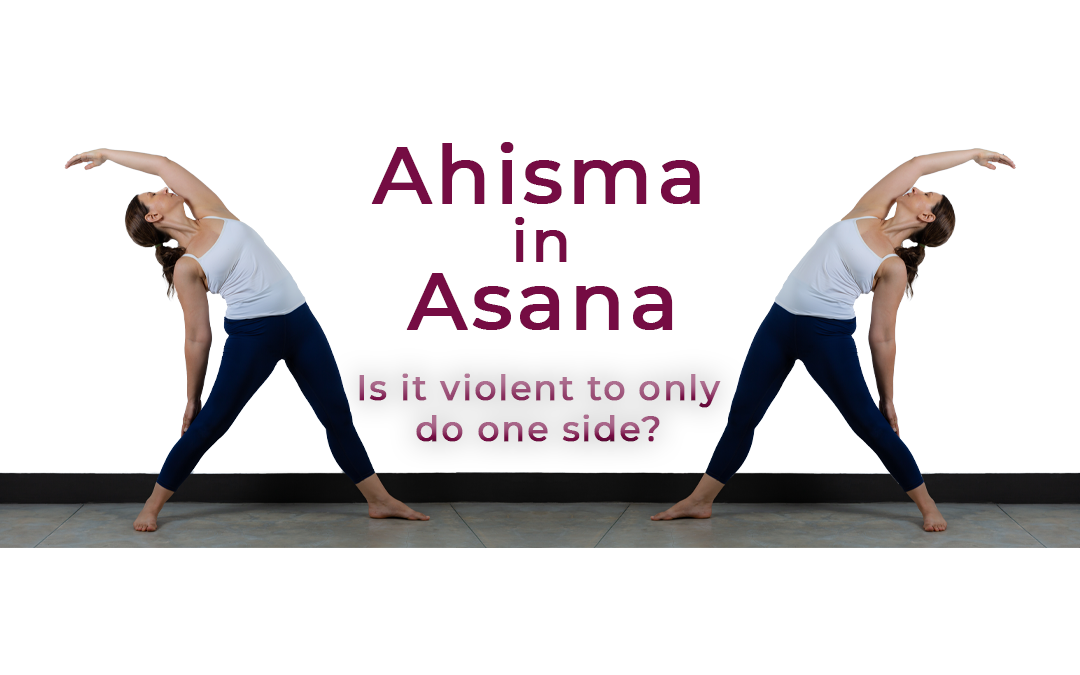
Ahisma = Non-violence Asana = Pose
You see, in dance improvisation, it’s encouraged to discover ‘new movement’ and ‘new movement phrases’. By allowing yourself free-flowing movement, the structure starts to melt away and new ways of moving your body are created. Which is super cool if you’re into it. But today these two ideologies were butting heads in my head.
I was struggling with the idea of having to fit my practice into an ideal structure. This is a structure that I’ve practiced for years, what is done on one side must be done on the second to stay “balanced”. But what if one side doesn’t need what the other needs? So, I decided for today, it’s time to let the flow be free.
Balance is important, I’m not saying otherwise, but isn’t allowing the freedom of movement to flow as it will important too?
My mind was working in symmetries where maybe it didn’t need to. Then the philosophy of the 8 limbs of yoga and the idea of Ahisma came up.
A brief summary of what Ahisma is and what it means from someone who isn’t a yoga philosophy master but enjoys a good discussion.
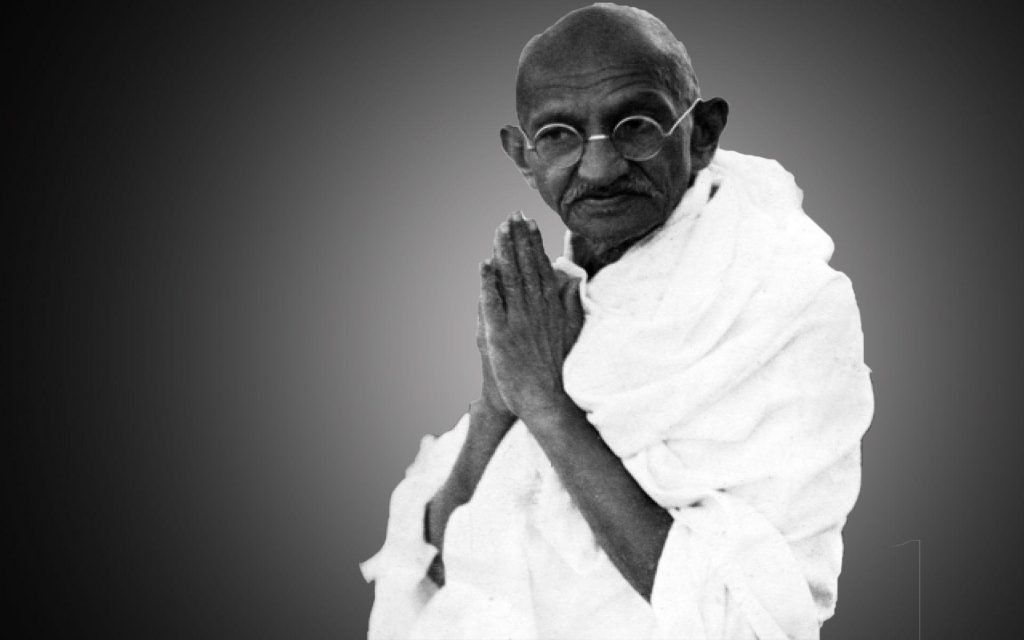
Ahisma is defined as non-violence. Most people see it as non-violence toward others (people, animals, plants, insects, etc) but it also means non-violence to yourself. Ahisma is love; speaking kindly, acting with kindness and compassion, and letting go of what no longer serves you. (You’ve heard this last one in many yoga classes, I’m sure). Mahatma Ghandi focused his life around the idea of Ahisma and if you’d like to learn more about him check out this website: https://www.mkgandhi.org/
Mahatma Ghandi
B.K.S. Iyengar said in his book The Tree of Yoga,
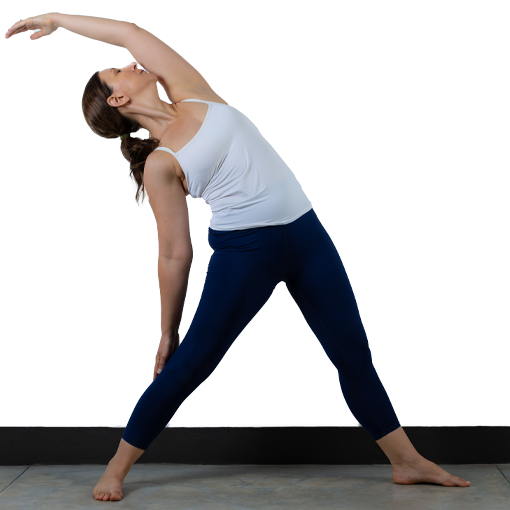
“Suppose that in performing an asana you are stretching more on the right side and less on the left…There is violence on the right side where you are stretching more, and the left side, where the stretch is less, appears to be non-violent…Though it may appear non-violent, it is also violence as the cells will die when they do not perform their functions as they should. One side thus manifests deliberate violence, and the other side non-deliberate violence.”
Disclaimer: Links included in this description might be affiliate links. If you purchase a product or service with the links that I provide I may receive a small commission. There is no additional charge to you! Thank you for supporting me so I can continue to provide you with free content.
Not doing one side can cause a feeling of being lopsided. But if one side needs a little more or less than the other side and we treat them according to what they need, then we are practicing Ahisma. Or in Iyengar’s words, “What is required is integration between the right and left sides of the body, and this balance of the two sides is true non-violence.”
So, by this reasoning it IS violent to not do one side. Oops. Sorry body. I’ll keep Free-Flowing but on BOTH sides from now on.
Have you ever had an ‘A-ha’ moment during your yoga practice?
Don’t worry if you didn’t.
Not every yoga practice is a life changing moment but instead builds moments to a life change.
After Savasana, I always prompt this:
“Take a few moments to check in with how you feel. How do you feel physically, emotionally, mentally, energetically, and spiritually?”
What does all this mean?
Yoga isn’t just the physical practice. Yes, we get on the mat, we move physically but when we move physically, it effects everything else.
Ever go into a fitness class or dance class in a foul mood but walk out feeling SO MUCH BETTER?? Yeah, it’s because of all the beautiful hormonal changes that happen when we move our bodies…
Moving your body has been scientifically proven to keep us healthy. It creates the happy hormones; Dopamine, Serotonin, Oxytocin, & Endorphins.1
Once you stop moving, your body starts to weaken and things start to deteriorate. Physically AND mentally. Because…MOVEMENT IS LIFE.
I digress…(and I gracefully step off my soap-box)
Here’s what I’m really asking you to observe and think about at the end of each practice.
Notice what you feel physically. The good, the not-so-good, and the bad. i.e. tingling, tightness, weakness, stretched out, muscle fatigue, soreness, etc. ~ By taking notice, you learn what poses, what style of yoga, what breath work, and what meditations work for you and your body.
2. What do you feel emotionally? i.e. boredom, excitement, sad, happy, peaceful, or maybe you can’t label what you feel. ~ If a wave of emotion comes up, do your best to experience it, even if it’s uncomfortable. By experiencing it, you’re allowing that energy to release. Releasing allows space for new energies to replace them.
3. What’s going on mentally? i.e. are worries popping up, are you anxious about something, are you thinking about something else or someone else, do you want to stay longer, (Monkey Mind) etc. ~ A big part of practicing yoga, is observing our thoughts. This is the perfect time to do so. Just ‘cause the thought is there, doesn’t mean it’s true or you have to act on it.
4. How do you feel energetically? i.e. are you fidgety, fatigued, sleepy, calm, re-energized, etc. ~ These signals help you figure out if and how the practice helped you, or not.
5. What, if anything, has come up spiritually? i.e. any ‘A-ha’ moments, epiphanies, or personal realizations, any noticeable changes within yourself; how you cope with stress, life changes, beliefs, etc. ~ Sometimes, this is as simple as an answer to a complex issue you were having…maybe how to resolve a relationship issue or how to execute a plan.
I’ll say this: not every practice is going be a life changing epiphany. Sometimes we get these awesome ‘A-ha!’ moments but more often than not, the changes are subtle and appear over time. This is why having a consistent yoga practice is important. Small changes culminate to create awareness and mindfulness.
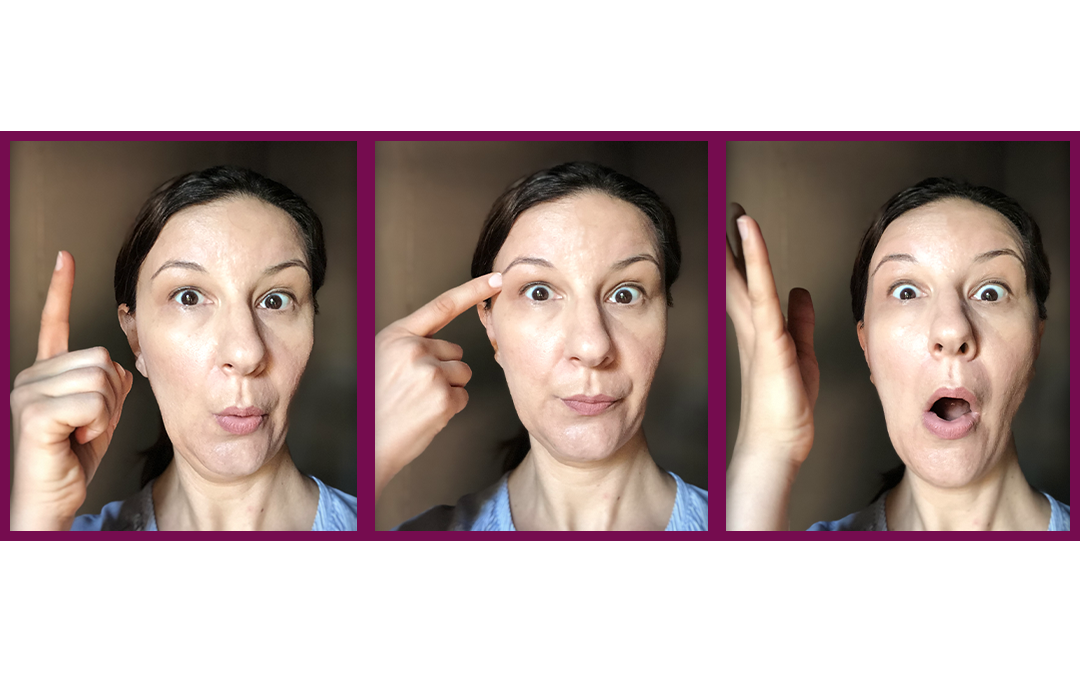
Have you had an ‘A-ha’ moment during your yoga practice? What light bulb went on for you?
Have an awesome day! Namaste my friends.
1Shah, A., 2020. Happy hormones: 4 chemicals that activate happiness and how to increase them naturally. [online] Everyday Science. Available at: https://www.everydayscience.blog/happy-hormones/ [Accessed 11 June 2021].
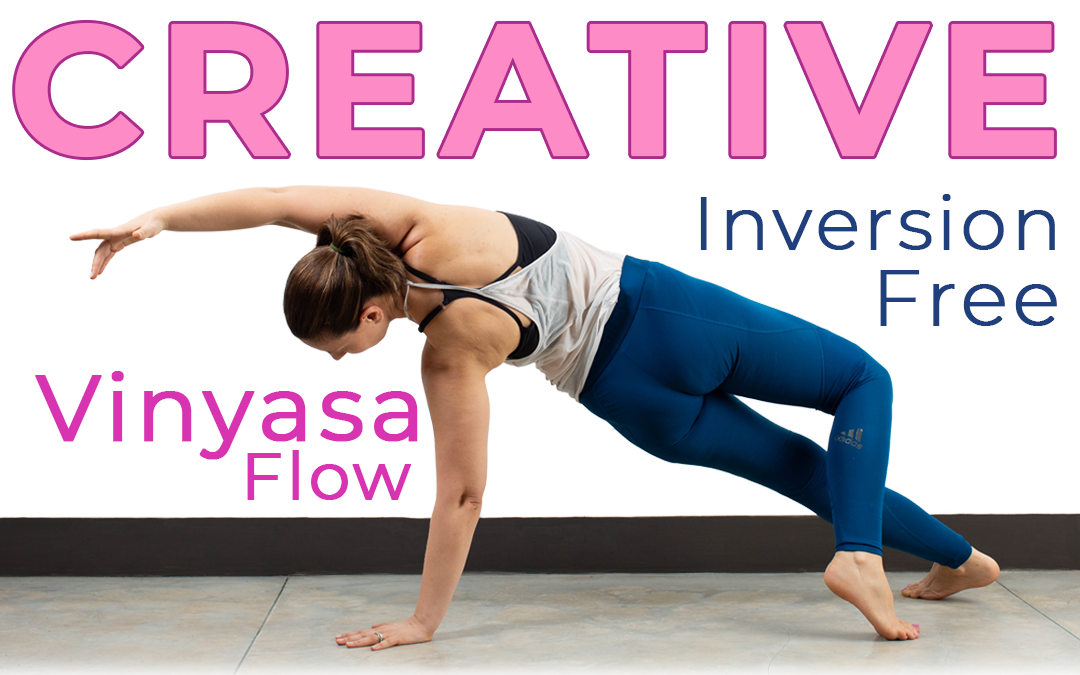
Missing that creative spark in your Vinyasa Flow? It stinks to find yourself stagnant and uninspired in your yoga practice; especially if you’re Inversion Free.
Sometimes there is comfort in returning to the same flow. BUT…sometimes you need to change things up.
This Inversion Free Creative Vinyasa Flow does just that. The flow moves at a faster pace all over the mat, facing different directions, and has a circular feel to it.
It’s fun, challenging, and sparks creativity.
Good for experienced or seasoned practitioners. ⚠️Minimal cueing.
Only props you’ll need are for savasana. i.e. Blocks, pillows, bolsters, blankets, etc.
Enjoy! Be well. Remember to breathe. ????????Namaste my friends????????