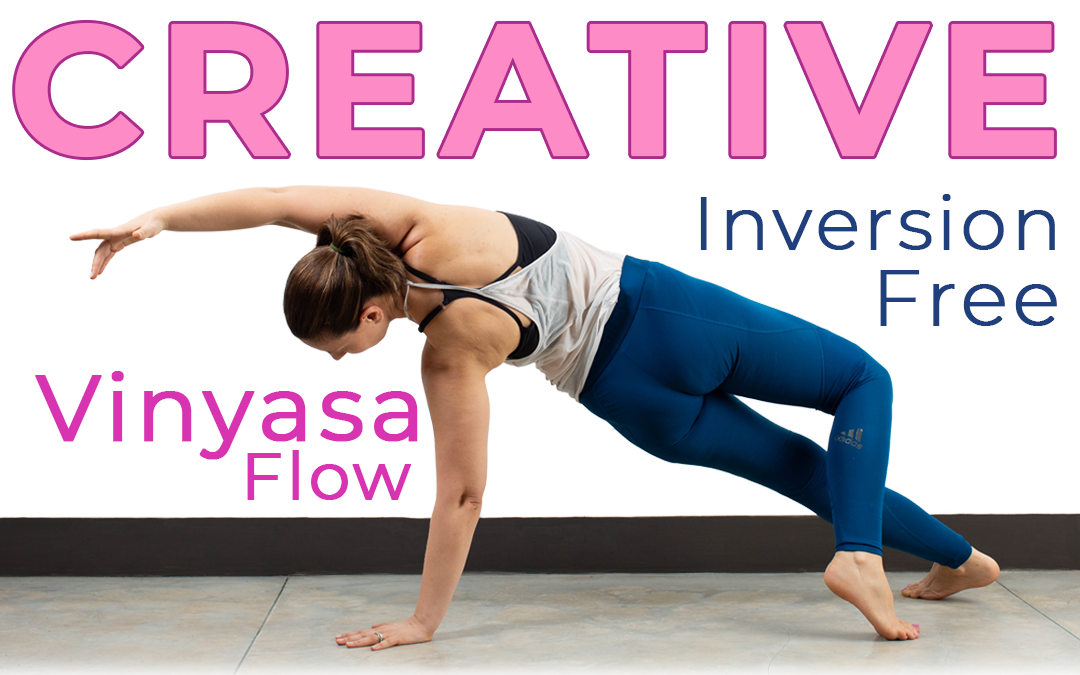
Missing that creative spark in your Vinyasa Flow? It stinks to find yourself stagnant and uninspired in your yoga practice; especially if you’re Inversion Free.
Sometimes there is comfort in returning to the same flow. BUT…sometimes you need to change things up.
This Inversion Free Creative Vinyasa Flow does just that. The flow moves at a faster pace all over the mat, facing different directions, and has a circular feel to it.
It’s fun, challenging, and sparks creativity.
Good for experienced or seasoned practitioners. ⚠️Minimal cueing.
Only props you’ll need are for savasana. i.e. Blocks, pillows, bolsters, blankets, etc.
Enjoy! Be well. Remember to breathe. ????????Namaste my friends????????
Below are some excerpts of the studies and articles I found on this subject. I’m not gonna lie, it’s interesting but VERY dry reading. Citations are at the bottom along with a list for further reading.
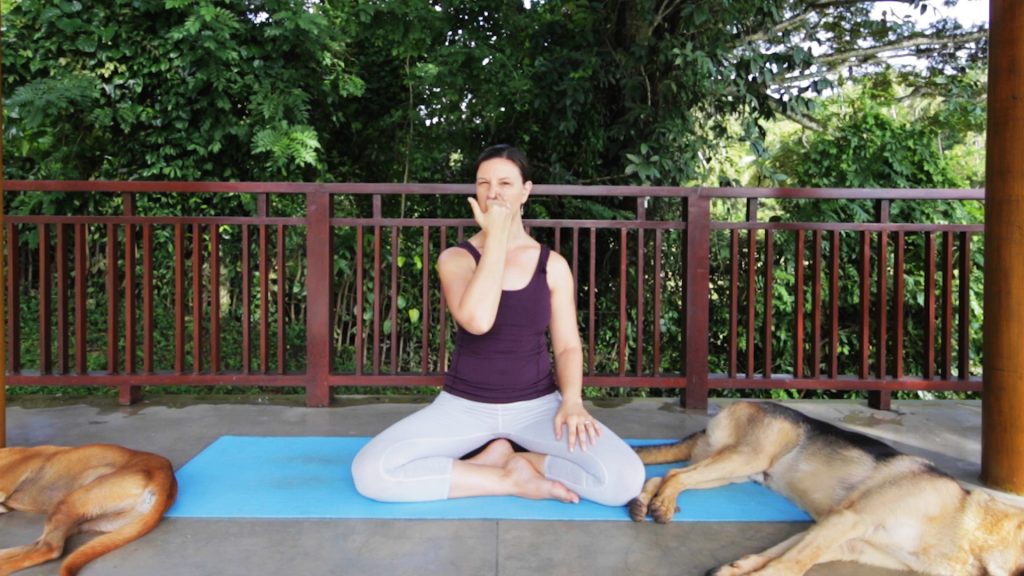
IOP & Meditation
IOP = Intraocular Pressure = measurement of the fluid pressure inside the eye.
It (Meditation) has multiple potential benefits for normal-pressure and high-pressure glaucoma patients including a reduction in intraocular pressure, increasing cerebral blood flow and oxygenation, and decreasing action of the sympathetic nervous system with a corresponding increase in parasympathetic nervous system activity.
Meditation leads to a “relaxation response” mediated by nitric oxide with decrease in the stress hormone cortisol, increase in neurotrophins and mitochondrial energy production, and improves the overall quality of life of glaucoma patients. 1
IOP & Pranayama and Diaphragmatic Breathing Study
Précis:
Yogic pranayama and diaphragmatic breathing are potential adjunctive therapies for patients with glaucoma; however, they are not substitutes for medicine or eye drops.
Purpose:
Currently, medical or surgical lowering of intraocular pressure is the only therapeutic approach for treating primary open-angle glaucoma. Intraocular pressure maintenance is influenced by autonomic activity (sympathetic and parasympathetic). “Yogic pranayama” and “diaphragmatic breathing” are exercises that can affect autonomic activity by stimulating a wakeful hypometabolic state of parasympathetic dominance. We aimed to assess the effect of yogic pranayama and diaphragmatic breathing on intraocular pressure to determine whether it can be recommended for individuals with established glaucoma in combination with glaucoma medication as an adjuvant therapy.
Results:
Compared with the wait-list group, the yogic pranayama and diaphragmatic breathing exercise group had significantly lowered intraocular pressure (right eye: 20.85±3.39 to 14.90±2.86 mm Hg; left eye: 20.30±4.12 to 14.25±3.85 mm Hg; P<0.001).
Conclusion:
Yogic pranayama and diaphragmatic breathing exercises can reduce intraocular pressure in patients with primary open-angle glaucoma and can therefore be recommended as an adjuvant therapy.3
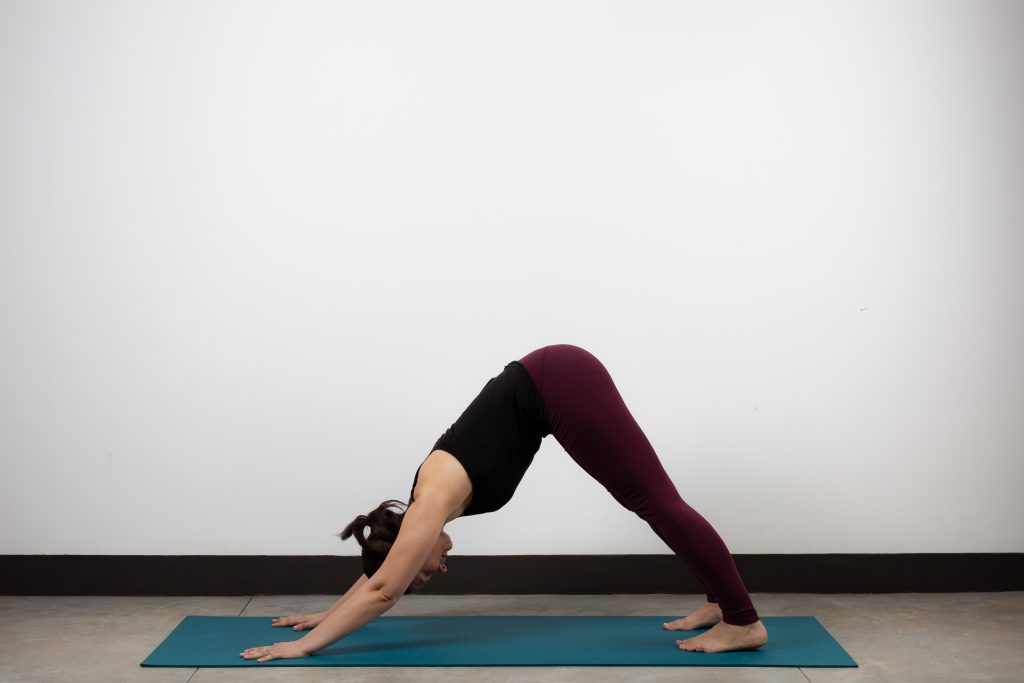
IOP in regard to Downward Facing Dog, Uttanasana, + More…
In previous research, studies and case reports had tested only the headstand position, which showed a marked two-fold rise in IOP. In the new study, researchers had healthy participants with no eye-related disease and glaucoma patients perform a series of inverted yoga positions, including downward facing dog, standing forward bend, plow, and legs up the wall. They captured the IOP in each group at baseline seated, immediately assuming the pose, two minutes while holding the pose, right after they performed each pose in the seated position, and then again 10 minutes after resting in the seated position.
Both normal and glaucoma study participants showed a rise in IOP in all four yoga positions, with the greatest increase of pressure occurring during downward facing dog. When the measurements were taken after the participants returned to a seated position and again after waiting ten minutes, the pressure in most cases remained slightly elevated from the baseline.
“While our study results don’t show a dramatic difference in IOP between the normal participants and those with glaucoma, we believe that additional research, with a larger study population and longer durations of practicing the inverted positions is warranted,” said first author Jessica Jasien, M.En., research associate with the Shelley and Steven Einhorn Clinical Research Center at NYEE.2
1 Dada, Tanuj, et al. “Meditation: A Polypill for Comprehensive Management of… : Journal of Glaucoma.” LWW, Journal of Glaucoma, Feb. 2020, journals.lww.com/glaucomajournal/Abstract/2020/02000/Meditation__A_Polypill_for_Comprehensive.11.aspx.
Home practiceNo make upNo hair stylingNo fussJust me, my breath and my mat.
Starting a home practice can be difficult. Some tips to help you get on your mat and into your practice.
Create a welcoming environment with as little distraction as possible. Only have what you might need for your practice; mat or mats, block, strap, pillows, bolsters, music, etc. If wall hangings, plants or statues are inspiration for you, add them. If you have limited space, make the best of it. You really only need a space that’s about 2ft x 6ft.
A note on this: I find for myself, if the mat and props can stay where I like it, without having to set it up and break it down every time I want to practice; I’m more likely to practice.
Put the devices away. You don’t need your tablet and your phone and your laptop and your mp3 player. If you are streaming a yoga class or are using your device for music that’s cool. Be mindful and just use it for that—no Facebook, no Instagram, no texting; you get the idea.
Schedule the time for yourself. It may take a while to figure out what time of day works for you. And once you find it…it may change. Several times. ‘Cause, you know, life happens. Allow yourself the flexibility to adjust the time but always show up for it.
Once you manage to get on your mat, then what? You might find that you get on the mat and just sit there…or you might get on the mat and notice you want/need a pedicure (true story). Maybe you just stay in downward facing dog for a while, or childs pose, maybe you do sun salutations until your arms drop off…no worries because…
YOU GOT ON THE MAT! ????
This is the start of creating your home practice…just keep getting on your mat consistently and you will find your way. Trust the process and trust your intuition. Once you get started you may find yourself lost in exploration which is so flippin’ awesome!How do you know what to do?If you’ve ever taken a yoga class, in person or online, you can use that as reference for your home practice. Taking a class from someone else can inspire more asanas or creative flows that maybe you didn’t think of; it’s ok to use those and play.
**Keep in mind: Yoga is not a competitive sport.**
The point is not to be more flexible or do a better arm balance than the bendy people that you saw online…it’s to get familiar with your own body & breath, to calm your mind, use your body and gain all around health. Once you really get into your practice then use those bendy people as inspiration instead of an intention of being better than someone else. Ego can creep up when you least expect it. There’s a quote from ballet dancer Mikhail Baryshnikov that expresses this idea;
“I do not try to dance better than anyone else. I only try to to dance better than myself.”
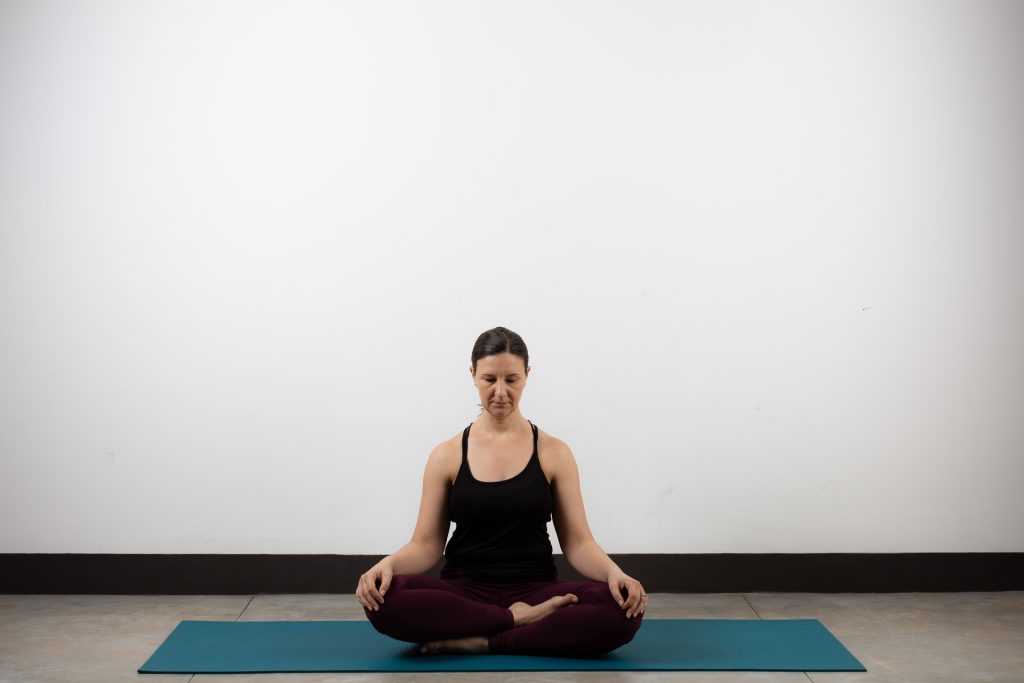
This rings true to any achievement you strive for just replace “dance” with your goal of choice. MEDITATION PRACTICEIf meditation is more your style or you want to incorporate more meditation in your life, then do it. Set up a comfy place to sit upright so you’re less likely to fall asleep. SET A TIMER.
Start off small if you’re just starting out in your meditation practice….30 seconds is good if you’re not used to sitting still. Build your tolerance from there. Baby steps.
Your eyes can be open slightly or closed. Whichever is more comfortable and whichever offers less distractions. If you chose open eyes, focus on either the tip of your nose or something low in front of you. This offers less distraction and better focus.
Your mind WILL wonder. It’s what minds do. The purpose of meditation isn’t to void all thoughts. Honestly, if you did that, you might be brain dead—yikes! Instead, observe what comes up; random thoughts, distractions, love, hate, annoyance, peacefulness, memories, etc.
A note on this: You are not your thoughts…let them pass. If tears, laughter or other reactions come up; experience them…it will pass.
My favorite type of meditation is focusing on the breath but there are SO many different types of meditation out there. I encourage you to explore and find what resonates with you.