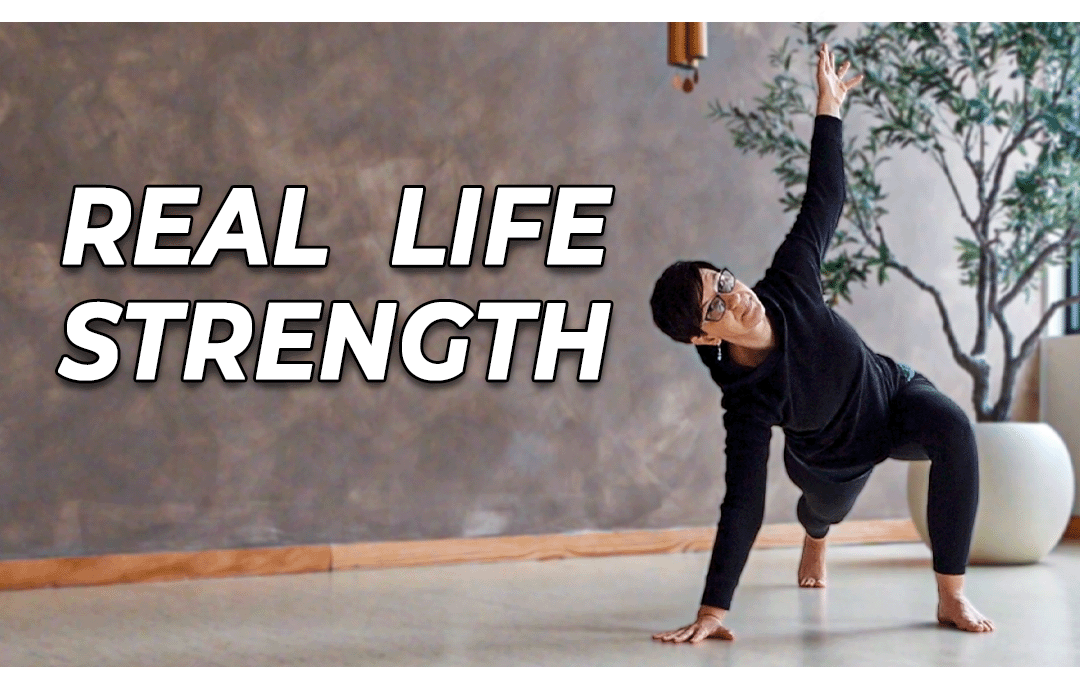
Not just able to get down there — but able to move, shift, and get back up without second-guessing yourself.
Because that feeling matters more than people realize.
Why I Created This Practice:
I hear this often: “I feel strong… but I don’t feel steady on the floor.”
And it’s not a strength issue.
It’s a coordination one.
Most workouts train strength in upright, predictable positions. But life isn’t always upright — and it’s rarely predictable.
When you’re close to the ground, your body has to organize itself differently.
It has to twist, shift weight, reposition the hips, and coordinate multiple moving parts before force can even happen.
That’s the missing piece this practice trains.
Where This Shows Up in Real Life:
This type of strength quietly supports moments that matter:
Getting down on the floor to play with kids or grandkids
Sitting comfortably during family gatherings
Reaching under the bed or couch without hesitation
Picking up laundry or sorting clothes
Gardening or working close to the ground
Getting up without needing to brace on furniture
It’s not flashy strength. It’s confidence strength. The kind that makes you feel capable in your own body.
What Makes This Practice Different:
This isn’t isolated strength work.
It’s a coordinated mobility flow that teaches your body how to organize itself in motion.
You’re training:
Rotational mobility
Hip positioning
Weight shifting
Bodyweight strength
Coordination under load
Strength and control develop together — the way they’re meant to.
Movement Tips to Support Your Practice:
Keep these ideas in mind as you move through the practice:
You can substitute 3-leg plank in place of 3-legged dog if that feels more supportive.
Cushion your knees if they’re sensitive.
Focus on how your weight shifts rather than how big the movement looks.
Take smaller ranges of motion if needed.
You don’t have to look like me — or anyone else — while doing this movement. Your version will reflect your body, your mobility, and your strength right now…and that’s exactly where progress begins.
Do what you can with what you’ve got — baby steps are still steps in the right direction.
Getting up off the floor is one of those things you don’t think about… until it suddenly feels harder than it used to.
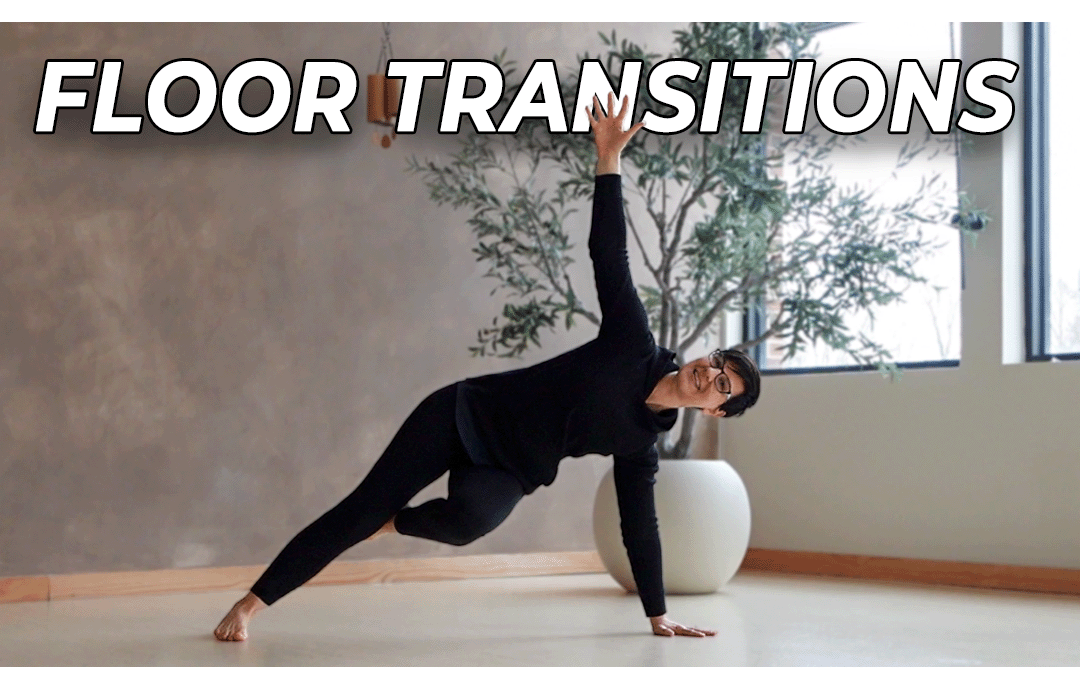
This long-form practice focuses on floor transitions—a powerful but often overlooked part of functional movement. Instead of isolating muscles or chasing intensity, this session builds whole-body strength, coordination, and balance so you feel steadier moving to and from the floor in everyday life.
If you’re active and generally feel strong, but notice hesitation or awkwardness when you’re on the floor, this practice was made with you in mind
What This Practice Helps With:
Floor transitions require your body to work as an integrated system. In this video, the focus is on building strength and control where it matters most.
This practice supports:
Getting up off the floor safely and smoothly
Improved balance during transitional movements
Stronger coordination between your core, hips, shoulders, and obliques
Better body awareness and control
Increased confidence moving through unfamiliar or “messy” positions
Rather than rushing through movements, the emphasis is on control, awareness, and connection, which is what helps these skills carry over into real life.
Who This Practice Is For:
This video is especially helpful for:
Active adults 40+ who want to stay strong and independent
People who don’t want intense workouts but still want meaningful strength
Anyone who feels strong standing up but less confident on the floor
Movers who value quality, coordination, and longevity
You don’t need to be flexible or “good at yoga” to benefit from this. The goal isn’t perfection—it’s building trust in your body.
What Makes This Practice Different:
Most workouts train strength in fixed positions. This practice trains how your body moves between positions.
By combining core, hip, shoulder, and oblique strength with coordination, this approach helps your nervous system learn how to organize movement more efficiently. That’s what makes getting up off the floor feel smoother and more controlled—not just stronger.
It’s a reminder that strength isn’t only about how much you can do, but how well your body works together.
Movement Tips to Support Your Practice:
Keep these ideas in mind as you move through the practice:
If the longer version feels challenging, do what you can now. Come back to it and keep trying. You’d be surprised how quickly your body can respond with some consistency.
If this bothers your wrists, you can use a yoga block under the heel of your hand while letting the fingers wrap the sides of the block. This may relieve some of the pressure.
Move at a pace where you can stay aware of what your body is doing, especially during transitions. Control matters more than speed here.
It’s normal for one side to feel different from the other. Treat that as information, not something to “fix” in one session.
If something feels unsteady, give yourself permission to pause, reset, or take a smaller version of the movement.
The goal is to practice being with the transitions, not to rush through them.
Why Floor Transitions Matter
Being able to move confidently on and off the floor isn’t about training for emergencies—it’s about supporting everyday life. Floor transitions build strength you can actually use, helping you feel capable, steady, and more at ease in your body.
If staying mobile, independent, and confident matters to you, this kind of movement deserves a place in your routine.
If balance has started to feel less reliable than it used to, you’re not imagining it.
And it’s not because you’re “doing something wrong.”
Often, it’s simply because the parts of the body that create stability — the feet, ankles, and legs — aren’t getting the kind of strength work they actually need.
This practice focuses on building stability from the ground up. Not through intense workouts. Not through high-impact drills. But through strength-based mobility that supports how your body functions in real life.
Why balance training often misses the mark:
A lot of balance exercises focus on challenge without foundation: standing on one leg, closing the eyes, wobbling on unstable surfaces. Those tools have a place, but they don’t work well if the structures underneath haven’t been strengthened first.
When your feet, ankles, and legs are better supported, your entire system tends to feel more stable:
Standing feels less effortful
Transitions feel more controlled
Movement feels more confident
Your body feels more trustworthy overall
This is the goal of balance training that’s built on strength instead of strain.
Who this type of practice is especially helpful for:
This approach tends to resonate most with active adults 40+ who want to:
Stay strong and capable without doing intense workouts
Support balance and stability as part of everyday life
Feel more confident moving through the world
Train in a way that feels sustainable long-term
It’s not about pushing harder. It’s about choosing inputs that actually support your body.
What this practice emphasizes:
Rather than isolating flexibility or relying on random drills, this practice emphasizes:
Strength through the feet and ankles
Leg and hip support for better stability
Controlled ranges of motion
Low-impact work that still creates meaningful change
Movement that carries over into daily life
This is strength-based mobility: training your body to be both capable and supported.
Movement Tip: About pliés, depth, and alignment:
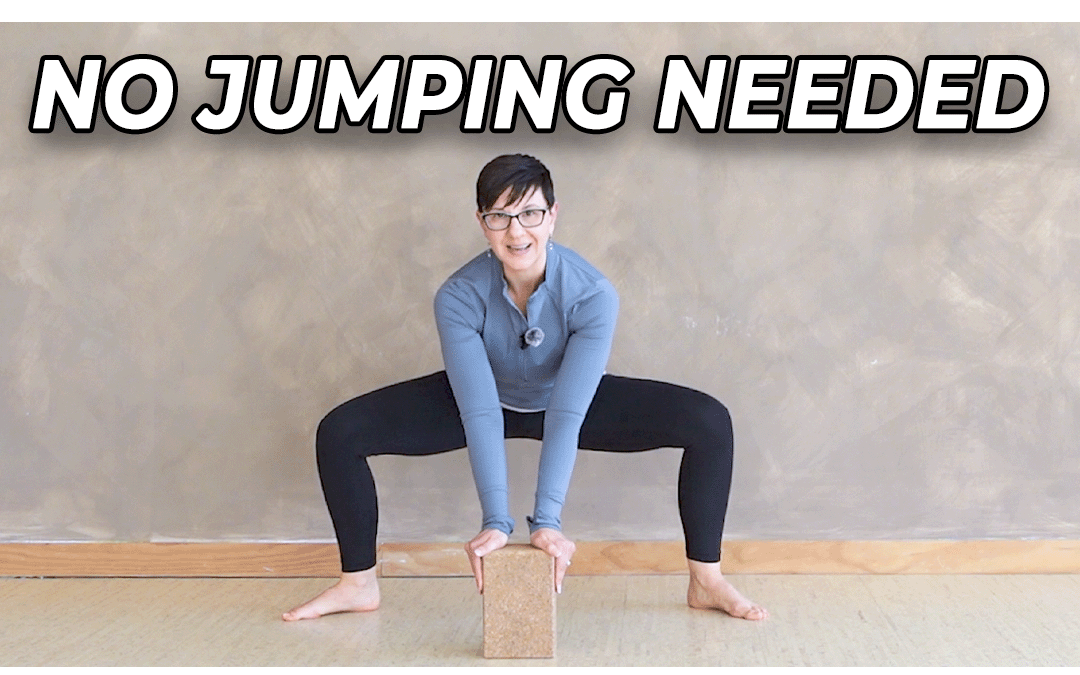
In this class, pliés in 2nd position are taught with ballet-based alignment, where the hips stay in line with the knees. This supports the technique and intention of the movement being presented.
Outside of a ballet context, allowing the hips to lower below knee height in a squat or plié is not automatically unsafe. Many people can tolerate deeper ranges well when the movement is controlled and feels good in their body.
Depth, repetition, and range of motion should always be adjusted to your individual mobility, strength, and comfort. If something doesn’t feel right, reduce the range and work within what feels stable for you.
Your body’s feedback matters more than any external rule.
A smarter way to approach balance
Balance doesn’t improve because you force yourself to wobble harder.
It improves when the structures responsible for supporting you become more capable.
Strength-based mobility gives your body more options. More support. More resilience.
If your hips feel tight, your lower back feels stubborn, or stretching alone doesn’t seem to make much of a difference, this practice offers a different approach.
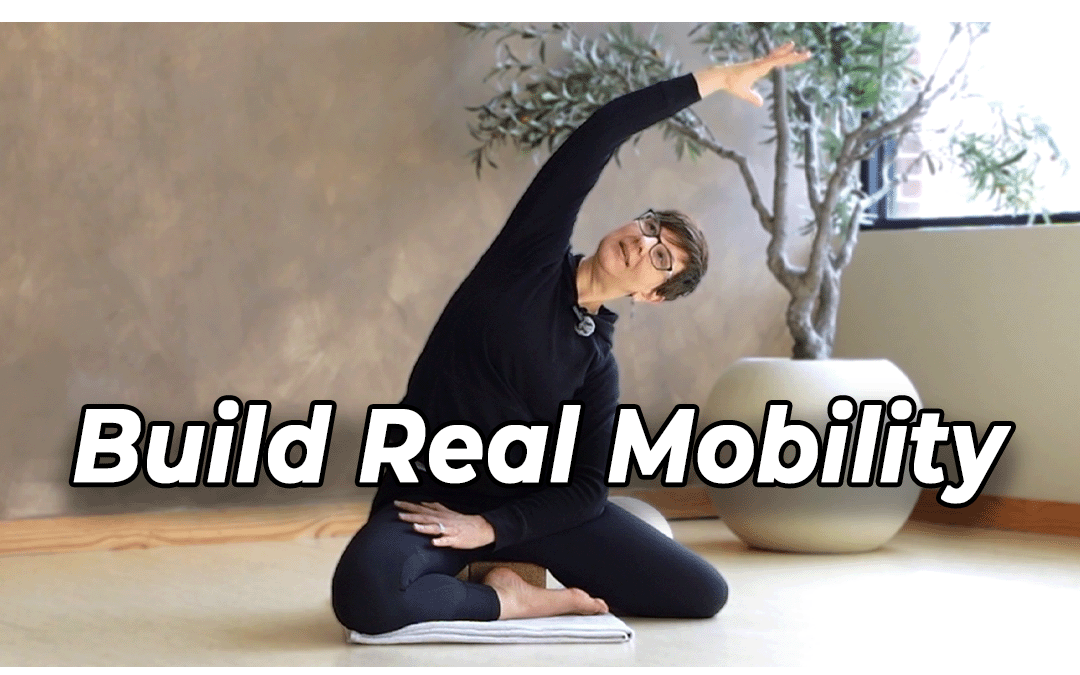
This 10 minute seated mobility routine focuses on building lower back and hip mobility through strength and control, not just flexibility.
Pushing the range of motion is not the goal — it’s to create movement your body can actually use in everyday life
The entire flow stays close to the floor and uses simple props (a small fitness ball and two blocks), making it accessible while still effective.
What This Mobility Practice Focuses On:
The majority of this flow targets the hips, while also supporting movement through the spine and even offering a bit of bonus ankle mobility along the way.
You’ll work on:
Lower back and hip mobility
Improving hip range of motion without forcing stretches
Core and glute strength for mobility support
Creating more controlled movement through the spine
Building a foundation that supports confidence with floor-based movement
This isn’t passive stretching. It’s intentional mobility work designed to help your body feel more supported, stable, and capable
What Makes This Practice Unique:
Many mobility or flexibility videos focus on how far you can stretch. This one focuses on something different: Can you control your movement?
By working seated with props, the practice:
Encourages strength alongside flexibility
Keeps you grounded and supported while working a wider range of motion
Emphasizes quality of movement over depth
Prioritizes sustainability and long-term progress
It’s a great option if you’re tired of feeling like you’re stretching all the time without seeing meaningful changes in how your body actually moves.
Notes & Tips to Keep in Mind:
A few simple ways to make this video more accessible:
No small fitness ball? Use a pillow or rolled-up towel instead.
Sensitive knees? Add extra cushioning (like a folded blanket) under you.
Do what you can with what you’ve got. Every body’s range of motion looks different, and that’s exactly how it should be.
This practice is meant to support your body, not force it.
Who This Video Is For
This seated mobility flow is especially helpful if:
Your hips or lower back often feel stiff
You want to improve mobility without getting up to standing
You’re looking for movement that supports healthy aging
You prefer a calmer, more intentional approach to mobility
You want options that meet your body where it is today
You don’t need extreme flexibility to benefit. The focus is on building awareness, strength, and usable range of motion over time.
Small, consistent mobility work adds up. It often looks subtle, but it shows up in the moments that matter—getting off the floor with more ease, moving without hesitation, and feeling more at home in your body over time.
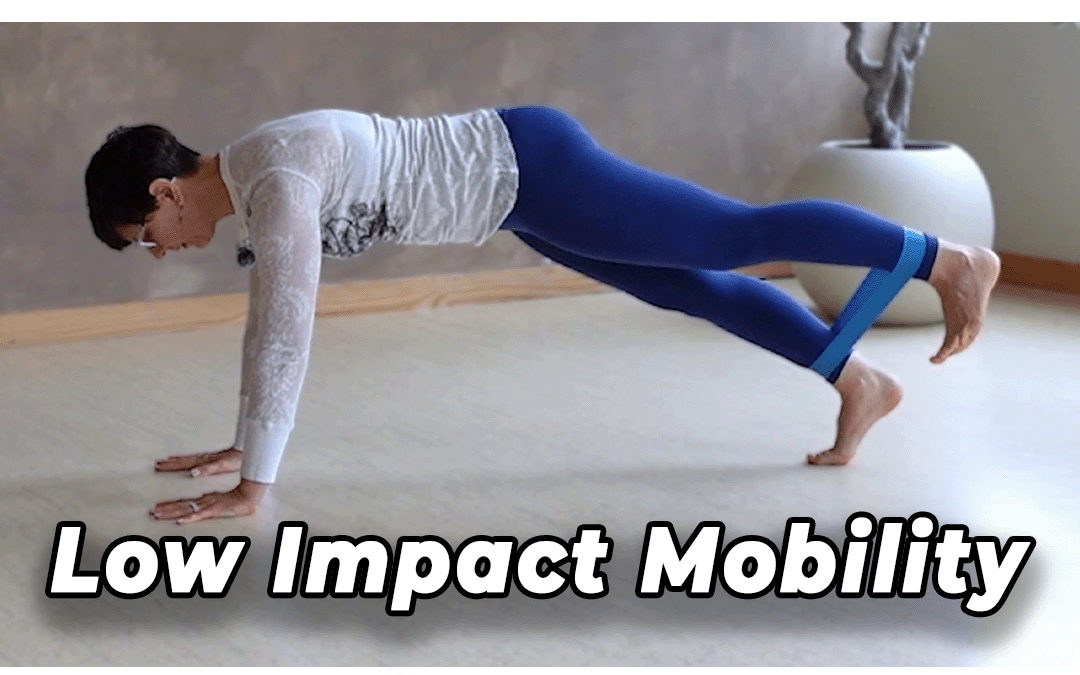
This low impact, Pilates-inspired mobility flow is short, spicy, and designed to deliver real results without beating up your joints.
In just 5 minutes, you’ll move through a Walk-the-Plank variation that challenges your arms, shoulders, core, and legs — building strength, stability, and mobility all at once. No rushing. No mindless reps. Just smart, intentional movement you can actually use in daily life.
Movement Notes & Tips:
Using a resistance band is optional–A light or medium resistance band works best if you’re adding one.
When lifting/circling the legs or arms, keep the hips level to the ground — no leaning!
Move with control — speed isn’t the goal here.
Focus on maintaining clean mechanics, even if that means reducing range.
Your movement may look different than mine — and that’s perfectly fine. Work within your abilities.
Why Low Impact Matters:
Low impact doesn’t mean low intensity.
It means:
Less joint stress
More longevity
Better consistency over time
It allows you to train smarter, not harder — supporting strong movement for the long haul.
This is for you if you want to:
Feel stronger without high-impact stress
Improve balance and control
Build real, functional strength
Support longevity instead of burning out your joints
Get more out of your body in minimal time
The flow is based on controlled, low-impact mechanics inspired by Pilates — with the option to add a resistance band if you want a little extra heat.
What You’ll Work On:
Full Body Strength + Mobility
This isn’t just stretching. You’re strengthening while you’re mobilizing — especially through the core, shoulders, hips, and legs.
Core Stability + Control
The Walk-the-Plank pattern challenges deep core engagement and anti-rotation strength.
Arms + Shoulder Engagement
You’ll build stability and strength without heavy loading or joint compression.
Leg Strength + Balance
The leg variations activate your stabilizers and challenge unilateral control — the good kind of wobbly
It’s low impact, full body, and built to make you stronger without beating you up.