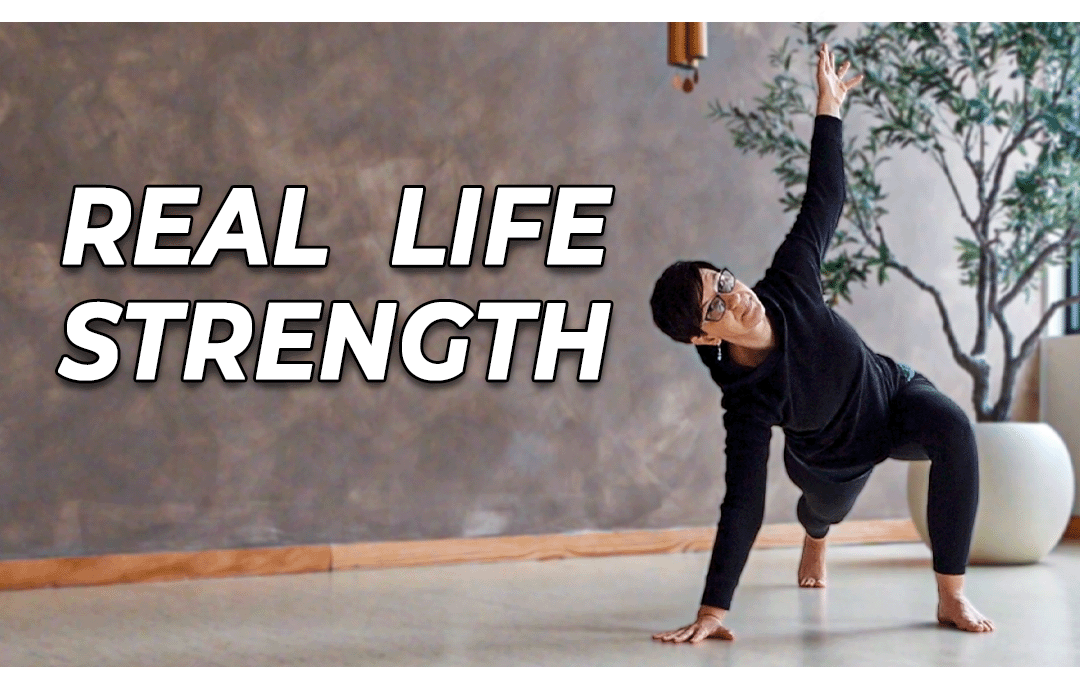
Not just able to get down there — but able to move, shift, and get back up without second-guessing yourself.
Because that feeling matters more than people realize.
Why I Created This Practice:
I hear this often: “I feel strong… but I don’t feel steady on the floor.”
And it’s not a strength issue.
It’s a coordination one.
Most workouts train strength in upright, predictable positions. But life isn’t always upright — and it’s rarely predictable.
When you’re close to the ground, your body has to organize itself differently.
It has to twist, shift weight, reposition the hips, and coordinate multiple moving parts before force can even happen.
That’s the missing piece this practice trains.
Where This Shows Up in Real Life:
This type of strength quietly supports moments that matter:
Getting down on the floor to play with kids or grandkids
Sitting comfortably during family gatherings
Reaching under the bed or couch without hesitation
Picking up laundry or sorting clothes
Gardening or working close to the ground
Getting up without needing to brace on furniture
It’s not flashy strength. It’s confidence strength. The kind that makes you feel capable in your own body.
What Makes This Practice Different:
This isn’t isolated strength work.
It’s a coordinated mobility flow that teaches your body how to organize itself in motion.
You’re training:
Rotational mobility
Hip positioning
Weight shifting
Bodyweight strength
Coordination under load
Strength and control develop together — the way they’re meant to.
Movement Tips to Support Your Practice:
Keep these ideas in mind as you move through the practice:
You can substitute 3-leg plank in place of 3-legged dog if that feels more supportive.
Cushion your knees if they’re sensitive.
Focus on how your weight shifts rather than how big the movement looks.
Take smaller ranges of motion if needed.
You don’t have to look like me — or anyone else — while doing this movement. Your version will reflect your body, your mobility, and your strength right now…and that’s exactly where progress begins.
Do what you can with what you’ve got — baby steps are still steps in the right direction.
Ever notice how balance feels fine… until it suddenly doesn’t?
That moment when you step off a curb a little too fast. When you turn quickly and feel a wobble. When your body hesitates instead of responding smoothly.
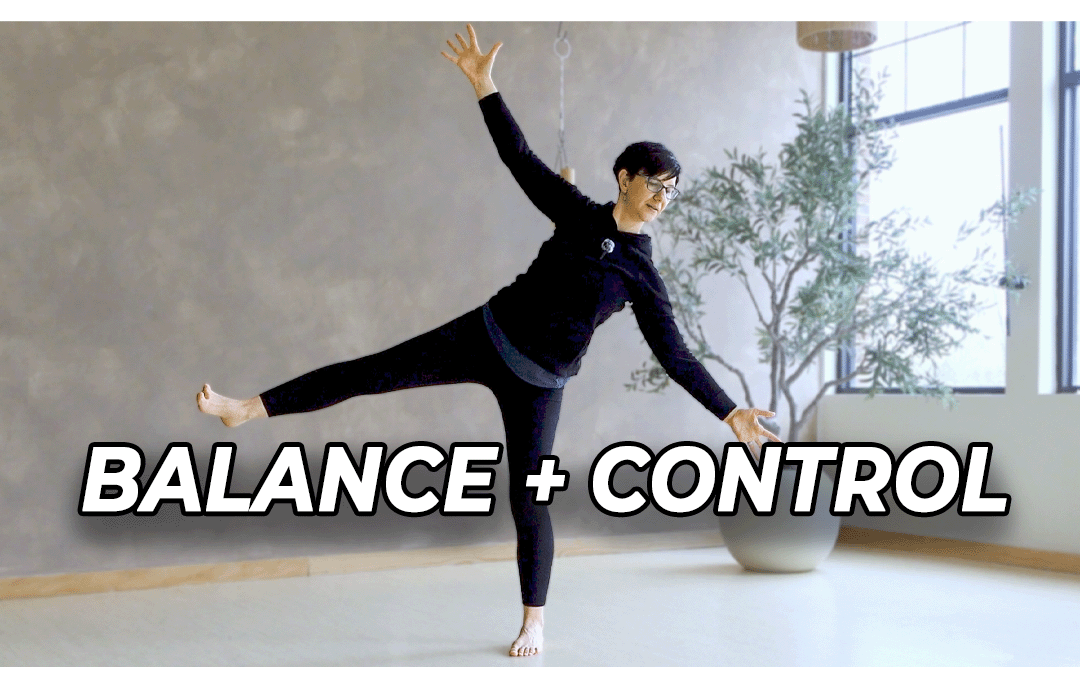
This mobility practice focuses on core and leg strength for balance, using standing movement patterns that challenge stability, coordination, and real-world control — without relying on intense workouts.
What This Practice Helps With:
This flow is designed to support:
Better balance and stability while walking and changing direction
Increased core and leg strength for balance
Stronger coordination and brain–body connection
More confidence during everyday movement
Greater control while shifting, reaching, and adapting (not just holding still)
Instead of isolating muscles, this style of functional movement for balance trains how your whole body works together—which is exactly what daily life requires.
What Makes This Flow Different:
Many balance routines stay repetitive and predictable. This practice uses layered movement patterns that challenge your brain and body to communicate more clearly.
Instead of training balance in one direction or one shape, this flow challenges:
Weight shifts
Direction changes
Cross-body coordination
Control while moving
Stability under changing demands
That’s where balance actually gets built—in how you organize yourself through movement, not just in the shapes you hold.
Training the Moments That Usually Catch You Off Guard (and Building Trust While You Do)
Most balance training happens in slow, predictable conditions. Real life doesn’t.
This practice intentionally challenges coordination, timing, and control so your body becomes more adaptable when movement feels less organized or more unexpected.
And something else happens along the way.
When you consistently practice intentional balance and thoughtful movement, you begin to trust your body more. Walking feels steadier. Turning feels more reliable. Movement feels less fragile and more dependable.
That confidence isn’t just physical. It comes from giving your system clearer information, better patterns, and consistent opportunities to adapt.
This is how mobility supports real-world resilience—not by pushing harder, but by training smarter.
Movement Tips to Get More Out of the Practice:
A few reminders to help this feel supportive and effective:
You don’t have to look exactly like me when doing this movement nugget. Move within your capabilities and allow yourself to enjoy it.
Be mindful of your knee placement in the lunge—your knee should track over the center of your foot.
Slow changes in direction down. Control matters more than how big the movement looks.
Use a light hand on a wall or chair if balance feels shaky. Support builds confidence, not weakness.
Breathe steadily, especially when things feel messy. That’s often where the most benefit lives.
Why This Style of Practice Matters
If balance has felt inconsistent, the issue is often not effort—it’s clarity.
Clarity in attention. Clarity while shifting and adapting. Clarity in how your body organizes itself through space.
Training mobility for balance builds movement that feels more reliable in daily life—walking with confidence, changing direction without hesitation, and trusting your body to respond when things shift unexpectedly.
Balance isn’t built in big, dramatic moments. It’s built in the quiet work of control, coordination, and consistency.
If your hips feel tight, your lower back feels stubborn, or stretching alone doesn’t seem to make much of a difference, this practice offers a different approach.
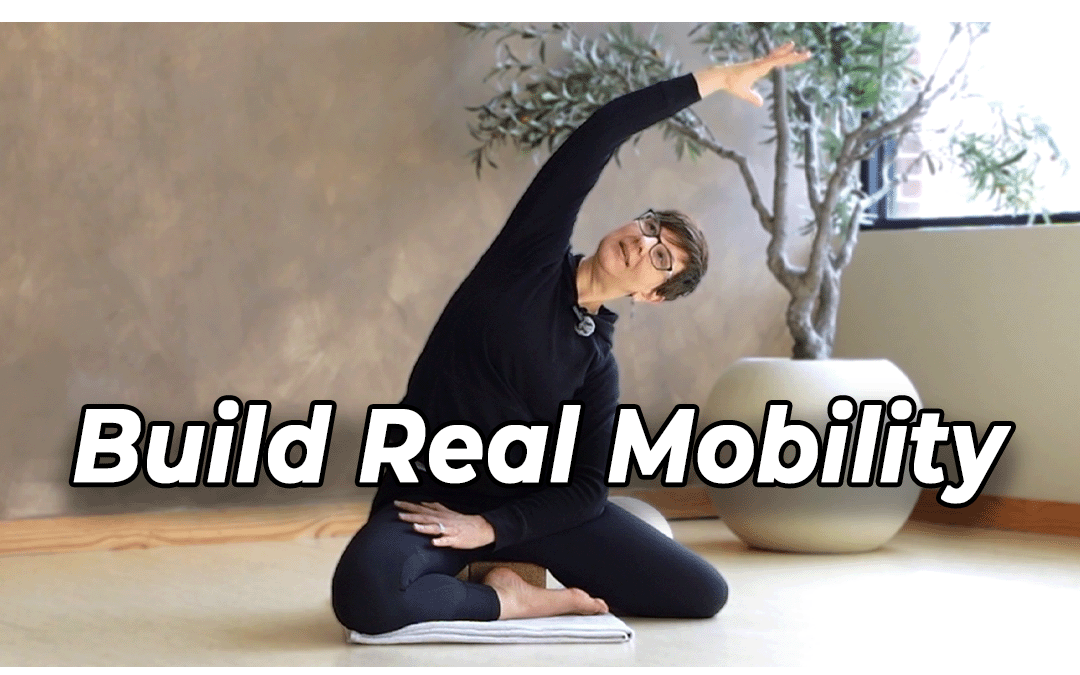
This 10 minute seated mobility routine focuses on building lower back and hip mobility through strength and control, not just flexibility.
Pushing the range of motion is not the goal — it’s to create movement your body can actually use in everyday life
The entire flow stays close to the floor and uses simple props (a small fitness ball and two blocks), making it accessible while still effective.
What This Mobility Practice Focuses On:
The majority of this flow targets the hips, while also supporting movement through the spine and even offering a bit of bonus ankle mobility along the way.
You’ll work on:
Lower back and hip mobility
Improving hip range of motion without forcing stretches
Core and glute strength for mobility support
Creating more controlled movement through the spine
Building a foundation that supports confidence with floor-based movement
This isn’t passive stretching. It’s intentional mobility work designed to help your body feel more supported, stable, and capable
What Makes This Practice Unique:
Many mobility or flexibility videos focus on how far you can stretch. This one focuses on something different: Can you control your movement?
By working seated with props, the practice:
Encourages strength alongside flexibility
Keeps you grounded and supported while working a wider range of motion
Emphasizes quality of movement over depth
Prioritizes sustainability and long-term progress
It’s a great option if you’re tired of feeling like you’re stretching all the time without seeing meaningful changes in how your body actually moves.
Notes & Tips to Keep in Mind:
A few simple ways to make this video more accessible:
No small fitness ball? Use a pillow or rolled-up towel instead.
Sensitive knees? Add extra cushioning (like a folded blanket) under you.
Do what you can with what you’ve got. Every body’s range of motion looks different, and that’s exactly how it should be.
This practice is meant to support your body, not force it.
Who This Video Is For
This seated mobility flow is especially helpful if:
Your hips or lower back often feel stiff
You want to improve mobility without getting up to standing
You’re looking for movement that supports healthy aging
You prefer a calmer, more intentional approach to mobility
You want options that meet your body where it is today
You don’t need extreme flexibility to benefit. The focus is on building awareness, strength, and usable range of motion over time.
Small, consistent mobility work adds up. It often looks subtle, but it shows up in the moments that matter—getting off the floor with more ease, moving without hesitation, and feeling more at home in your body over time.
If you like mobility work that actually builds strength while you’re moving, this one’s for you.
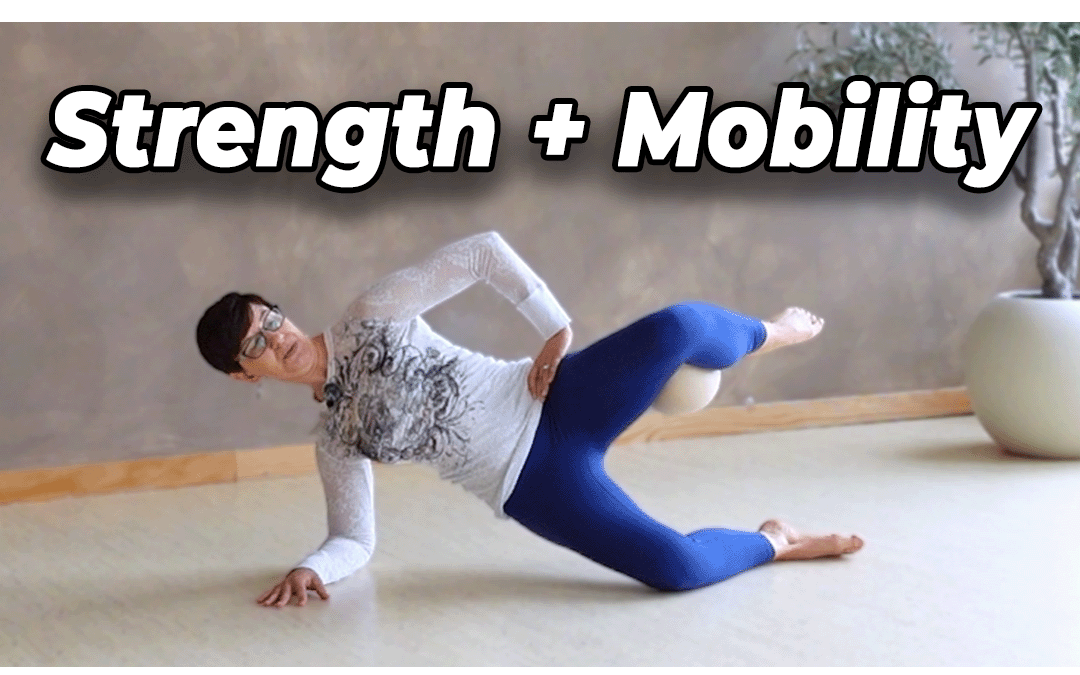
This Functional Mobility Flow for Hips, Shoulders & Core is a short, floor-based practice that blends strength and flexibility into one continuous sequence. It’s Pilates-influenced, fully follow-along, and designed to help your body feel more supported, coordinated, and capable — not just “stretched.”
You’ll work from a side-lying position into seated rotation, using your own body weight and a simple prop to increase leg activation and stability.
What Makes This Mobility Flow Different:
This isn’t passive stretching. Every transition asks your muscles to do something.
Instead of chasing range of motion, this flow focuses on:
Strength through movement
Control while changing positions
Stability as the hips and shoulders work together
That’s the sweet spot where mobility = strength + flexibility.
Movement Notes & Tips:
You can stay resting on the side of your hip instead of lifting into a full side plank if you want less intensity.
A fitness ball is used to activate the hamstrings, but a pillow, foam roller, or any object you can hold in your knee pit works just as well. Size doesn’t matter.
During the clamshell, any part of the feet can touch — what matters is that they stay connected.
You’ll notice my dancer habits (yes, the pointed feet 😄). It’s optional, but pointing can add extra lower-leg and foot engagement if you want it.
Core engagement is key for stability, so stay gently active through your center as you move.
Who This Practice Is Perfect For:
This practice is great if you:
Enjoy floor-based movement
Want mobility that feels purposeful, not floppy
Like strength and flexibility working together
Prefer short, efficient mobility sessions you can return to often
You don’t need fancy equipment or a huge space — just enough room to move on the floor.
What This Practice Helps With:
Hip mobility with active muscle engagement
Shoulder and upper-body support during floor work
Core stability for smoother transitions
Coordination between the lower and upper body
This flow packs a lot into just a few minutes. It’s the kind of practice that feels different each time, depending on how much control and intention you bring to it.
Save it, revisit it, and let it support stronger, more confident movement over time.
Ever have one of those days where your body feels like a creaky door hinge?
Same.
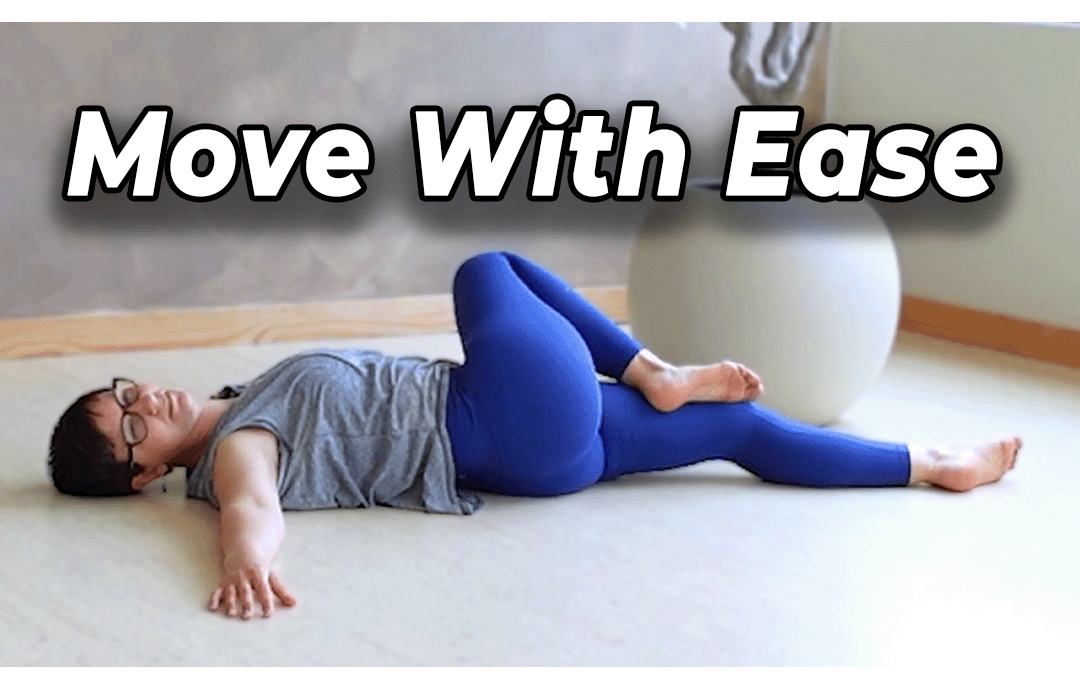
That’s exactly why I created this floor-based mobility flow — to help you unwind, decompress, and move with more ease without forcing a thing.
If your hips, shoulders, or low back have been feeling a little cranky lately, this calming mobility practice might be exactly what your body’s been asking for. Today’s class, Mobility to Help You Move with Ease, is all about helping you unwind, decompress, and move with more comfort — without standing poses, balancing acts, or anything that feels intimidating.
This entire sequence is done on the floor, making it an accessible, all-levels-friendly mobility practice you can do even on your stiffest days. With slow transitions and intentional rolling patterns, it’s designed to help your body find space, release tension, and reconnect with movement in a supportive way.
What Makes This Mobility Class Unique:
Unlike sessions that can keep you moving quickly, this flow stays low to the ground and focuses on ease first. You’ll move through:
Gentle reclined spinal twisting
A smooth roll into a half-frog-like position
A shoulder and deltoid release using the floor for support
A soft unwind back into your twist
A spacious finish in half Happy Baby and a bound-angle shape
Every transition is intentional and grounding, giving your body a chance to soften, open, and breathe without forcing the stretch.
Movement Notes & Tips:
Move within your range of motion. There’s no prize for pushing past your edge.
Add padding if you need it. A blanket or towel under the knee can make sliding on hard floors feel a lot nicer.
Let your breath support the movement. Holding your breath tends to create more rigidity — slow, steady breaths help things soften.
Your movement may look different than mine, and that’s perfect. You do you.
Who This Practice Is Perfect For:
This mobility class is especially supportive if:
You feel stiff from sitting or long workdays
Your hips or low back tend to tighten up
You prefer calm, floor-based movement
You want mobility without heavy lifting or intensity
You’re easing back into movement after a break
You love practices that feel nurturing and functional
If you’ve been craving something gentle and grounding that still helps you move better throughout your day, you’re in the right place
Why This Flow Feels So Good:
It decompression your spine without strain
Opens your hips in a safe, supported way
Loosens the shoulders using your own body weight
Encourages smooth, natural mobility patterns
Helps you reconnect to your body with ease
This isn’t about “pushing through” tightness. It’s about creating space so your body can move the way it’s meant to — with freedom, fluidity, and a little more comfort.