Core & Leg Strength for Balance
Ever notice how balance feels fine… until it suddenly doesn’t?
That moment when you step off a curb a little too fast.
When you turn quickly and feel a wobble.
When your body hesitates instead of responding smoothly.
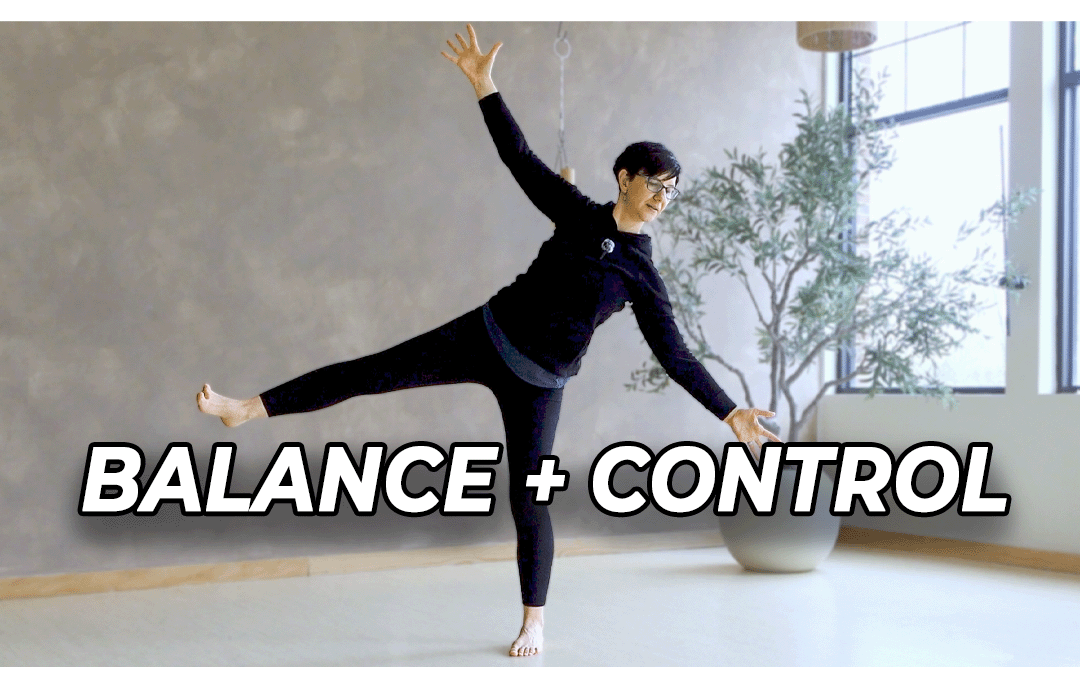
This mobility practice focuses on core and leg strength for balance, using standing movement patterns that challenge stability, coordination, and real-world control — without relying on intense workouts.
What This Practice Helps With:
This flow is designed to support:
- Better balance and stability while walking and changing direction
- Increased core and leg strength for balance
- Stronger coordination and brain–body connection
- More confidence during everyday movement
- Greater control while shifting, reaching, and adapting (not just holding still)
Instead of isolating muscles, this style of functional movement for balance trains how your whole body works together—which is exactly what daily life requires.
What Makes This Flow Different:
Many balance routines stay repetitive and predictable. This practice uses layered movement patterns that challenge your brain and body to communicate more clearly.
Instead of training balance in one direction or one shape, this flow challenges:
- Weight shifts
- Direction changes
- Cross-body coordination
- Control while moving
- Stability under changing demands
That’s where balance actually gets built—in how you organize yourself through movement, not just in the shapes you hold.
Training the Moments That Usually Catch You Off Guard (and Building Trust While You Do)
Most balance training happens in slow, predictable conditions. Real life doesn’t.
This practice intentionally challenges coordination, timing, and control so your body becomes more adaptable when movement feels less organized or more unexpected.
And something else happens along the way.
When you consistently practice intentional balance and thoughtful movement, you begin to trust your body more. Walking feels steadier. Turning feels more reliable. Movement feels less fragile and more dependable.
That confidence isn’t just physical. It comes from giving your system clearer information, better patterns, and consistent opportunities to adapt.
This is how mobility supports real-world resilience—not by pushing harder, but by training smarter.
Movement Tips to Get More Out of the Practice:
A few reminders to help this feel supportive and effective:
- You don’t have to look exactly like me when doing this movement nugget. Move within your capabilities and allow yourself to enjoy it.
- Be mindful of your knee placement in the lunge—your knee should track over the center of your foot.
- Slow changes in direction down. Control matters more than how big the movement looks.
- Use a light hand on a wall or chair if balance feels shaky. Support builds confidence, not weakness.
- Breathe steadily, especially when things feel messy. That’s often where the most benefit lives.
Why This Style of Practice Matters
If balance has felt inconsistent, the issue is often not effort—it’s clarity.
Clarity in attention.
Clarity while shifting and adapting.
Clarity in how your body organizes itself through space.
Training mobility for balance builds movement that feels more reliable in daily life—walking with confidence, changing direction without hesitation, and trusting your body to respond when things shift unexpectedly.
Balance isn’t built in big, dramatic moments. It’s built in the quiet work of control, coordination, and consistency.
That’s what smart mobility is for.
Move smart. Feel good. Stay strong.
🔗 Try my other mobility focused classes:
Pancakes & Waffles
The Hip Hammy Hustle
7-Minute Lower Body Mobility Routine