it’s about how well you control movement as your body shifts, reaches, and responds to change.
If your shoulders feel tight and your balance feels inconsistent, flexibility alone usually isn’t the missing piece.
Stability is.
This standing mobility flow focuses on balance and stability training while improving shoulder mobility using a resistance band. It’s short, efficient, and designed to help you feel more supported as you move through everyday transitions — without long workouts or floor work.
What This Standing Mobility Flow Works On:
This sequence blends yoga-based mobility with functional movement principles to support real-world strength and control. You’ll work on:
Shoulder mobility with active support
Balance and stability during dynamic weight shifts
Coordinating upper and lower body movement
Feeling steadier, more connected, and more confident in motion
Everything is done standing, making this a great option if you want effective mobility work that fits easily into your day.
Why Balance and Stability Training Matters:
Balance isn’t just a foot or ankle skill. It’s a whole-body conversation between your core, shoulders, hips, and nervous system. Training stability during movement — rather than only holding still — helps your body respond better when life isn’t predictable.
This flow emphasizes smooth transitions, controlled weight shifts, and integrated shoulder support so balance becomes something you move through, not something you try to freeze.
Notes & Tips to Keep in Mind:
Keep these cues in mind as you move:
Work within a comfortable shoulder range. We’re not working into pain. If your hands feel too narrow on the band and you notice discomfort in the shoulders, try widening your grip to reduce that sensation.
Light core engagement is recommended to help support your balance as you move through the transitions.
Your movement doesn’t need to look like mine. Everybody has its own structure, variations, and capabilities — work with what feels right for you.
In the curtsy squat, maintain tension in the resistance band so the shoulders and core stay active and supported.
As you transition from the second single-leg balance into the upper-back arch, allow the sit bones to shift slightly back to support the movement.
Have fun with it. Let your breath guide the transitions and help the movement feel fluid rather than forced.
A Smarter Way to Train Mobility
This isn’t about pushing harder or doing more — it’s about giving your body the right input. A few focused minutes of stability-based mobility can go a long way toward helping you feel steady, supported, and confident as you move.
If you’re looking for a standing mobility flow that supports both shoulder mobility and balance and stability training, this practice fits easily into real life.
It’s about how confidently you can support yourself—especially when your hands and arms are involved.
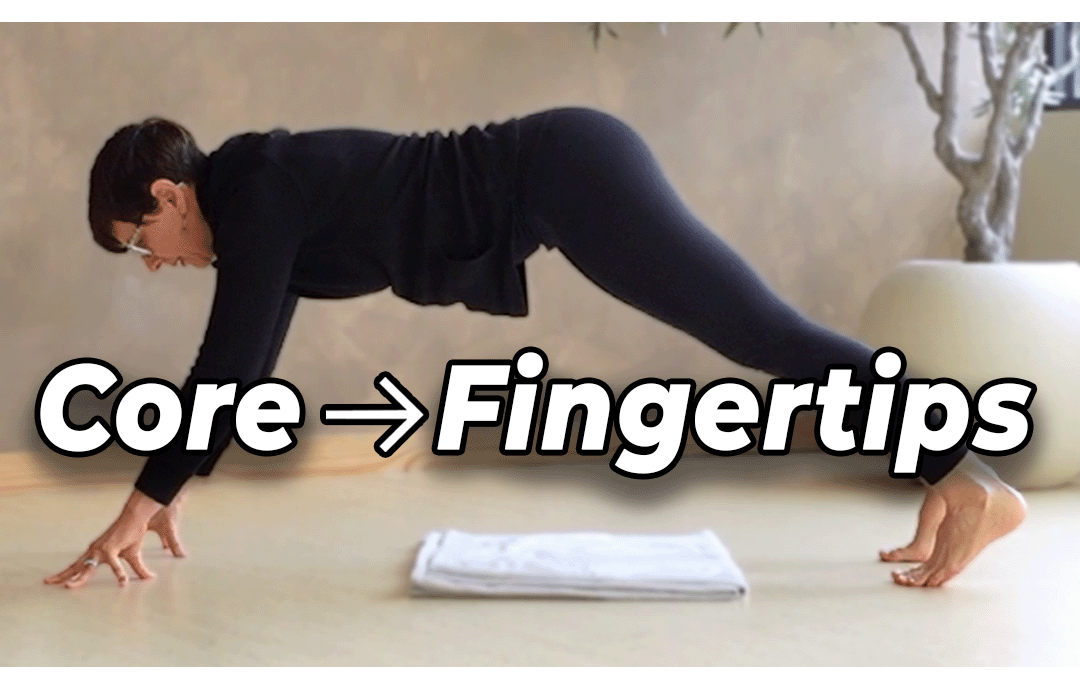
This progressive mobility flow focuses on building strength that helps you feel more stable and capable when you’re on the floor, moving through hands-and-knees positions, or needing to catch yourself with your arms.
Instead of rushing through movement, this practice slows things down so your body can actually learn how to organize strength from the inside out.
What This Practice Helps You Build:
This mobility flow supports:
Confidence supporting weight through the hands and arms
Core strength that stabilizes the upper body
Better control when transitioning on and off the floor
Strength that shows up when balance is challenged
Awareness of how momentum can bypass real strength
Because the movement progresses, the body has time to adapt. Each level asks a little more from the system without forcing you to be anywhere you’re not ready for yet.
Why Control Matters More Than Speed:
Momentum can make movement feel easier—but it strips you of the opportunity to build strength. When you slow down, your nervous system has to stay engaged. That’s where meaningful strength and coordination develop.
This practice emphasizes intentional loading, especially through the arms and hands, so strength is built gradually and with awareness.
Notes & Tips to Keep in Mind:
Keep these cues in mind as you move:
Avoid using momentum—it cheats you out of building strength.
You can lower one elbow at a time, just stay connected through your core so your body doesn’t rock side to side.
Use a rolled-up yoga mat, towel, or blanket under your knees for cushioning.
This movement nugget progresses—do what you can now and stay consistent. Come back and continue building toward the ultimate level.
Your movement doesn’t need to look exactly like mine. You do you
Who This Practice Is Perfect For:
This flow is especially helpful if you:
Want to feel more confident supporting yourself on the floor
Care about strength that carries over into real life
Prefer thoughtful progressions over fast workouts
Appreciate options and permission to build over time
This mobility flow isn’t about pushing harder. It’s about building strength you can trust—so when your hands, arms, and core need to support you, they’re ready.
If your body has been craving movement that feels supportive, effective, and not overcomplicated, this full body spinal mobility flow is a great place to land.
This floor-based practice blends mobility and strength to help your spine move through multiple directions — flexion, rotation, and extension — while encouraging your hips and shoulders to work with the spine instead of against it. The result is movement that feels organized, steady, and surprisingly satisfying.
Everything is done on the floor, making this flow approachable while still offering depth if you want it.
What This Mobility Flow Works On:
Spinal mobility through flexion, rotation, and extension
Hip flexor strength and stretch
Shoulder stability and range of motion
Oblique engagement during controlled twisting
Coordinated, multi-planar movement that helps the body feel more adaptable
Rather than isolating one area, this flow connects the dots — which is often what helps the body feel better overall.
What Makes This Mobility Flow Different:
This isn’t about chasing a deep stretch or forcing shapes.
The movement builds gradually from a seated pike position into spinal flexion and rotation, then layers into a supported backbend option inspired by Wild Thing. Each phase gives your body time to organize, adapt, and respond.
By moving the spine in multiple directions, this flow supports healthier use of fascia and encourages strength within your available range — which tends to feel much better long-term.
Movement Notes & Tips:
Keep these cues in mind as you move:
Light core engagement is encouraged to support the low back
Stay out of pain. If something feels sharp, pinchy, or uncomfortable in a way that doesn’t feel helpful, ease off or choose a smaller version of the movement.
As you round forward, look toward your belly button, letting the forehead move toward the knees
Use your breath to support the movement — breathing freely helps it feel fuller and less forced
If the backbend bothers your wrist, you can lower down onto your elbow instead
Your movement may look different than mine — do what feels best for your body
There’s no “right” version here, only an effective one for you.
Who This Practice Is Perfect For:
This practice is great if you:
Feel stiff through your back, hips, hamstrings, or shoulders
Want mobility that also builds strength and stability
Prefer floor-based movement over standing flows
Appreciate clear, intentional pacing
Want movement that supports everyday function, not just flexibility
You don’t need extreme range of motion here. The focus is on how you move, not how far you go.
This is the kind of movement you can return to again and again — adaptable, supportive, and meant to meet you where you are. Take what feels useful, leave the rest, and let your body guide the process.
If you like mobility work that actually builds strength while you’re moving, this one’s for you.
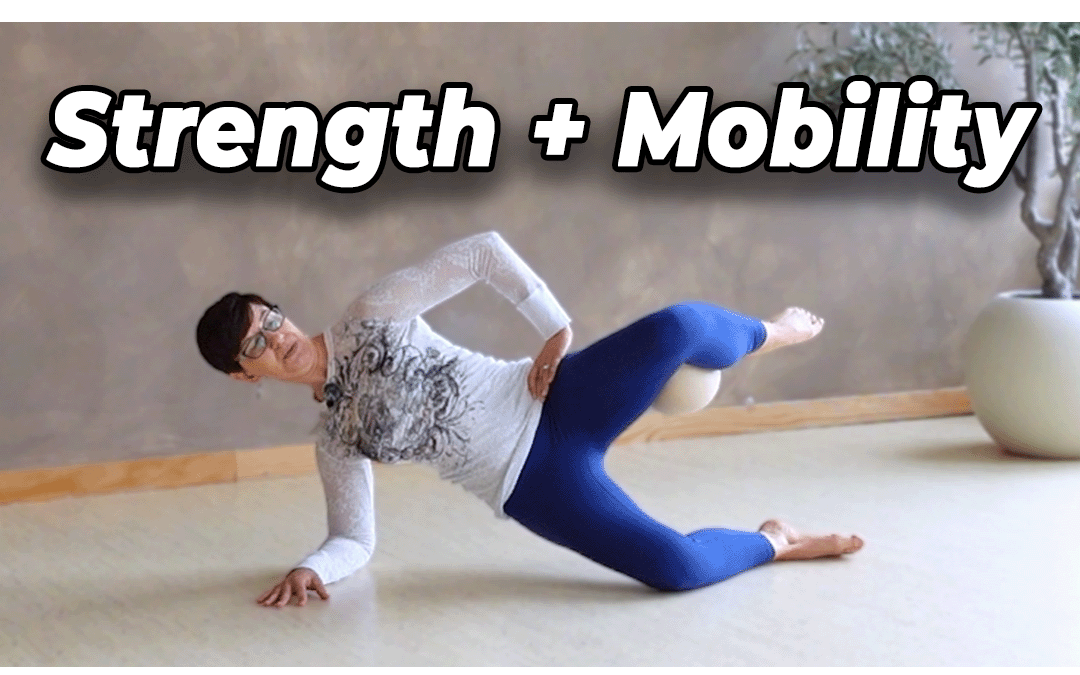
This Functional Mobility Flow for Hips, Shoulders & Core is a short, floor-based practice that blends strength and flexibility into one continuous sequence. It’s Pilates-influenced, fully follow-along, and designed to help your body feel more supported, coordinated, and capable — not just “stretched.”
You’ll work from a side-lying position into seated rotation, using your own body weight and a simple prop to increase leg activation and stability.
What Makes This Mobility Flow Different:
This isn’t passive stretching. Every transition asks your muscles to do something.
Instead of chasing range of motion, this flow focuses on:
Strength through movement
Control while changing positions
Stability as the hips and shoulders work together
That’s the sweet spot where mobility = strength + flexibility.
Movement Notes & Tips:
You can stay resting on the side of your hip instead of lifting into a full side plank if you want less intensity.
A fitness ball is used to activate the hamstrings, but a pillow, foam roller, or any object you can hold in your knee pit works just as well. Size doesn’t matter.
During the clamshell, any part of the feet can touch — what matters is that they stay connected.
You’ll notice my dancer habits (yes, the pointed feet 😄). It’s optional, but pointing can add extra lower-leg and foot engagement if you want it.
Core engagement is key for stability, so stay gently active through your center as you move.
Who This Practice Is Perfect For:
This practice is great if you:
Enjoy floor-based movement
Want mobility that feels purposeful, not floppy
Like strength and flexibility working together
Prefer short, efficient mobility sessions you can return to often
You don’t need fancy equipment or a huge space — just enough room to move on the floor.
What This Practice Helps With:
Hip mobility with active muscle engagement
Shoulder and upper-body support during floor work
Core stability for smoother transitions
Coordination between the lower and upper body
This flow packs a lot into just a few minutes. It’s the kind of practice that feels different each time, depending on how much control and intention you bring to it.
Save it, revisit it, and let it support stronger, more confident movement over time.
Ever have one of those days where your body feels like a creaky door hinge?
Same.
That’s exactly why I created this floor-based mobility flow — to help you unwind, decompress, and move with more ease without forcing a thing.
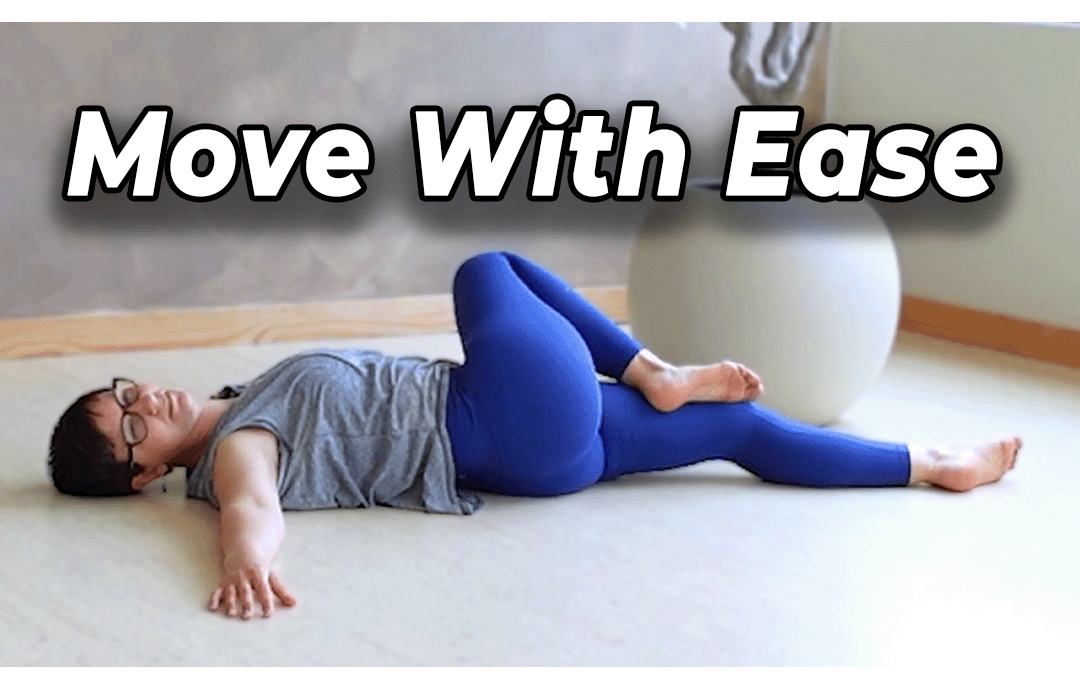
If your hips, shoulders, or low back have been feeling a little cranky lately, this calming mobility practice might be exactly what your body’s been asking for. Today’s class, Mobility to Help You Move with Ease, is all about helping you unwind, decompress, and move with more comfort — without standing poses, balancing acts, or anything that feels intimidating.
This entire sequence is done on the floor, making it an accessible, all-levels-friendly mobility practice you can do even on your stiffest days. With slow transitions and intentional rolling patterns, it’s designed to help your body find space, release tension, and reconnect with movement in a supportive way.
What Makes This Mobility Class Unique:
Unlike sessions that can keep you moving quickly, this flow stays low to the ground and focuses on ease first. You’ll move through:
Gentle reclined spinal twisting
A smooth roll into a half-frog-like position
A shoulder and deltoid release using the floor for support
A soft unwind back into your twist
A spacious finish in half Happy Baby and a bound-angle shape
Every transition is intentional and grounding, giving your body a chance to soften, open, and breathe without forcing the stretch.
Movement Notes & Tips:
Move within your range of motion. There’s no prize for pushing past your edge.
Add padding if you need it. A blanket or towel under the knee can make sliding on hard floors feel a lot nicer.
Let your breath support the movement. Holding your breath tends to create more rigidity — slow, steady breaths help things soften.
Your movement may look different than mine, and that’s perfect. You do you.
Who This Practice Is Perfect For:
This mobility class is especially supportive if:
You feel stiff from sitting or long workdays
Your hips or low back tend to tighten up
You prefer calm, floor-based movement
You want mobility without heavy lifting or intensity
You’re easing back into movement after a break
You love practices that feel nurturing and functional
If you’ve been craving something gentle and grounding that still helps you move better throughout your day, you’re in the right place
Why This Flow Feels So Good:
It decompression your spine without strain
Opens your hips in a safe, supported way
Loosens the shoulders using your own body weight
Encourages smooth, natural mobility patterns
Helps you reconnect to your body with ease
This isn’t about “pushing through” tightness. It’s about creating space so your body can move the way it’s meant to — with freedom, fluidity, and a little more comfort.