
Strengthen Feet, Ankles & Legs for Stability
If balance has started to feel less reliable than it used to, you’re not imagining it.
And it’s not because you’re “doing something wrong.”
Often, it’s simply because the parts of the body that create stability — the feet, ankles, and legs — aren’t getting the kind of strength work they actually need.
This practice focuses on building stability from the ground up. Not through intense workouts. Not through high-impact drills. But through strength-based mobility that supports how your body functions in real life.
Why balance training often misses the mark:
A lot of balance exercises focus on challenge without foundation: standing on one leg, closing the eyes, wobbling on unstable surfaces. Those tools have a place, but they don’t work well if the structures underneath haven’t been strengthened first.
When your feet, ankles, and legs are better supported, your entire system tends to feel more stable:
- Standing feels less effortful
- Transitions feel more controlled
- Movement feels more confident
- Your body feels more trustworthy overall
This is the goal of balance training that’s built on strength instead of strain.
Who this type of practice is especially helpful for:
This approach tends to resonate most with active adults 40+ who want to:
- Stay strong and capable without doing intense workouts
- Support balance and stability as part of everyday life
- Feel more confident moving through the world
- Train in a way that feels sustainable long-term
It’s not about pushing harder.
It’s about choosing inputs that actually support your body.
What this practice emphasizes:
Rather than isolating flexibility or relying on random drills, this practice emphasizes:
- Strength through the feet and ankles
- Leg and hip support for better stability
- Controlled ranges of motion
- Low-impact work that still creates meaningful change
- Movement that carries over into daily life
This is strength-based mobility: training your body to be both capable and supported.
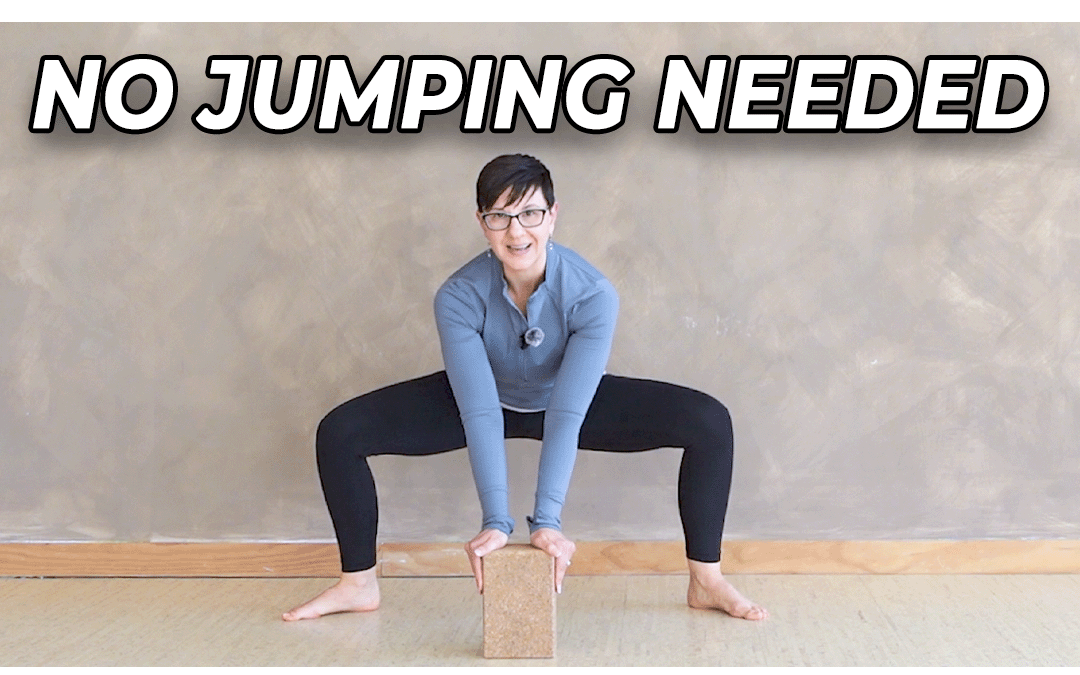
Movement Tip: About pliés, depth, and alignment:
In this class, pliés in 2nd position are taught with ballet-based alignment, where the hips stay in line with the knees. This supports the technique and intention of the movement being presented.
Outside of a ballet context, allowing the hips to lower below knee height in a squat or plié is not automatically unsafe. Many people can tolerate deeper ranges well when the movement is controlled and feels good in their body.
Depth, repetition, and range of motion should always be adjusted to your individual mobility, strength, and comfort. If something doesn’t feel right, reduce the range and work within what feels stable for you.
Your body’s feedback matters more than any external rule.
A smarter way to approach balance
Balance doesn’t improve because you force yourself to wobble harder.
It improves when the structures responsible for supporting you become more capable.
Strength-based mobility gives your body more options. More support. More resilience.
That’s the work.
And over time, it adds up.
Move smart. Feel good. Stay strong.
🔗 Try my other mobility focused classes:
Pancakes & Waffles
The Hip Hammy Hustle
7-Minute Lower Body Mobility Routine