
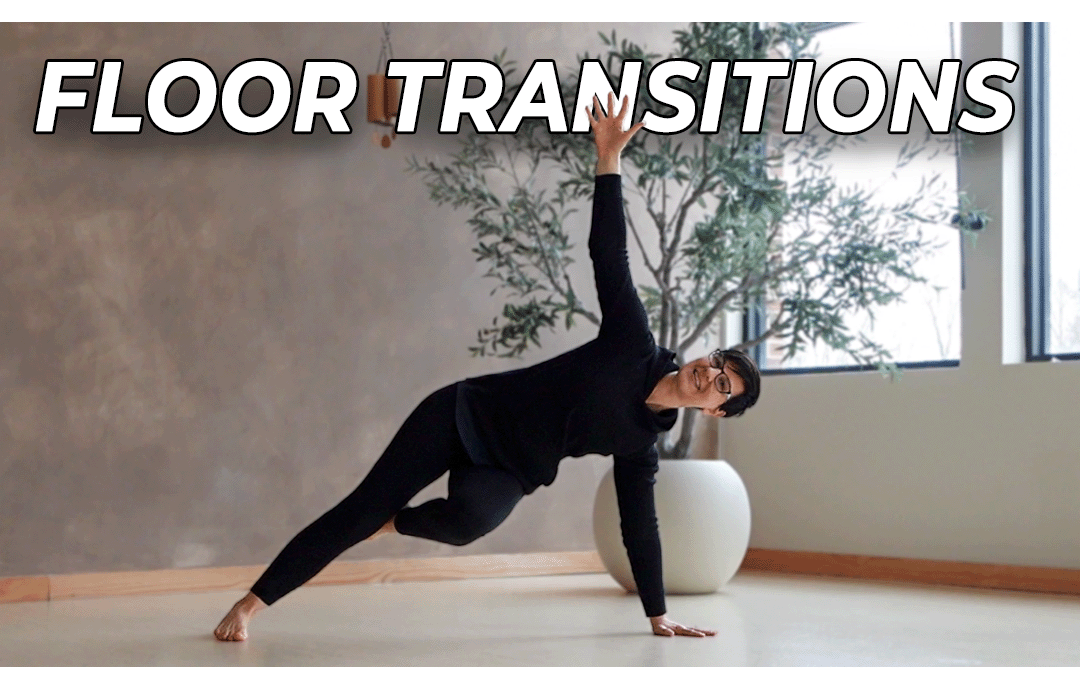
Getting up off the floor is one of those things you don’t think about…
until it suddenly feels harder than it used to.
This long-form practice focuses on floor transitions—a powerful but often overlooked part of functional movement. Instead of isolating muscles or chasing intensity, this session builds whole-body strength, coordination, and balance so you feel steadier moving to and from the floor in everyday life.
If you’re active and generally feel strong, but notice hesitation or awkwardness when you’re on the floor, this practice was made with you in mind
What This Practice Helps With:
Floor transitions require your body to work as an integrated system. In this video, the focus is on building strength and control where it matters most.
This practice supports:
- Getting up off the floor safely and smoothly
- Improved balance during transitional movements
- Stronger coordination between your core, hips, shoulders, and obliques
- Better body awareness and control
- Increased confidence moving through unfamiliar or “messy” positions
Rather than rushing through movements, the emphasis is on control, awareness, and connection, which is what helps these skills carry over into real life.
Who This Practice Is For:
This video is especially helpful for:
- Active adults 40+ who want to stay strong and independent
- People who don’t want intense workouts but still want meaningful strength
- Anyone who feels strong standing up but less confident on the floor
- Movers who value quality, coordination, and longevity
You don’t need to be flexible or “good at yoga” to benefit from this.
The goal isn’t perfection—it’s building trust in your body.
What Makes This Practice Different:
Most workouts train strength in fixed positions. This practice trains how your body moves between positions.
By combining core, hip, shoulder, and oblique strength with coordination, this approach helps your nervous system learn how to organize movement more efficiently. That’s what makes getting up off the floor feel smoother and more controlled—not just stronger.
It’s a reminder that strength isn’t only about how much you can do, but how well your body works together.
Movement Tips to Support Your Practice:
Keep these ideas in mind as you move through the practice:
- If the longer version feels challenging, do what you can now. Come back to it and keep trying. You’d be surprised how quickly your body can respond with some consistency.
- If this bothers your wrists, you can use a yoga block under the heel of your hand while letting the fingers wrap the sides of the block. This may relieve some of the pressure.
- Move at a pace where you can stay aware of what your body is doing, especially during transitions. Control matters more than speed here.
- It’s normal for one side to feel different from the other. Treat that as information, not something to “fix” in one session.
- If something feels unsteady, give yourself permission to pause, reset, or take a smaller version of the movement.
The goal is to practice being with the transitions, not to rush through them.
Why Floor Transitions Matter
Being able to move confidently on and off the floor isn’t about training for emergencies—it’s about supporting everyday life. Floor transitions build strength you can actually use, helping you feel capable, steady, and more at ease in your body.
If staying mobile, independent, and confident matters to you, this kind of movement deserves a place in your routine.
Move smart. Feel good. Stay strong.
🔗 Try my other mobility focused classes:
Pancakes & Waffles
7-Minute Lower Body Mobility Routine